
What Is an Email Automation Funnel (and Why Most People Build One Wrong)
An email automation funnel is a sequence of triggered emails that guide a subscriber from first contact to paying customer — and beyond. Unlike a broadcast newsletter that goes to everyone at the same time, an automation funnel responds to behavior: someone downloads your lead magnet, your funnel fires. Someone abandons a checkout, your funnel fires. Someone clicks a link but doesn't buy, your funnel fires again.
The problem is that most marketers treat email automation like a fancy drip sequence: write five emails, set a timer, call it done. That's not a funnel. That's a conveyor belt. A real email automation funnel branches, adapts, and responds differently based on what each subscriber does. And building that kind of system — even a simple one — requires you to think carefully about stages, triggers, and tools before you write a single subject line.
This guide walks you through the entire setup process, from mapping the subscriber journey to choosing the right software, to the specific mistakes that make funnels quietly fail for months before anyone notices.
The Five Stages Every Email Automation Funnel Needs
Before you touch any software, you need to understand the journey you're building. Every effective email automation funnel covers these five stages, though the length and complexity of each will vary by your offer and audience.
Stage 1: Acquisition
This is how a stranger becomes a subscriber. A lead magnet — a free guide, checklist, webinar, or trial — is offered in exchange for an email address. The quality of your acquisition offer determines the quality of your list. If you promise a "free PDF" with no clear value, you'll attract low-intent subscribers who ghost your funnel from day one.
Stage 2: Onboarding (The Welcome Sequence)
The first 48–72 hours after opt-in are the most important in any funnel. Open rates are highest during this window, and your subscriber is most curious about what they've signed up for. Your welcome sequence should deliver the lead magnet, set expectations for what comes next, introduce your positioning, and plant the seed for your core offer — all without pitching immediately.
Stage 3: Nurture
This is where most funnels either build trust or bleed subscribers. The nurture stage sends educational, entertaining, or story-driven content that moves the subscriber closer to understanding why they need your solution. The mistake most people make here is padding the nurture phase with too much value and no direction. Every nurture email should have a subtle thread pulling toward your offer.
Stage 4: Conversion
This is your sales sequence: the emails that make the ask. Good conversion emails are specific about the problem, specific about the solution, and specific about why now. Urgency needs a reason (a real deadline, a real bonus expiring). Vague scarcity is the fastest way to erode trust with a list you spent months building.
Stage 5: Retention and Re-engagement
Most funnels stop at the sale. The best ones treat the post-purchase period as its own automation: onboarding new customers, offering upsells at the right moment, and running re-engagement sequences for subscribers who go cold. A subscriber who hasn't opened an email in 90 days costs you deliverability points — you either re-engage them or remove them.
How to Set Up Your Email Automation Funnel: Step by Step
Step 1: Define a Single Goal for the Funnel
Before mapping a single email, answer this: what is the one action this funnel exists to produce? A product purchase, a strategy call booking, a trial signup? Multi-goal funnels almost always underperform because the messaging hedges. Pick one outcome per funnel and optimize ruthlessly for it.
Step 2: Map the Subscriber Journey on Paper First
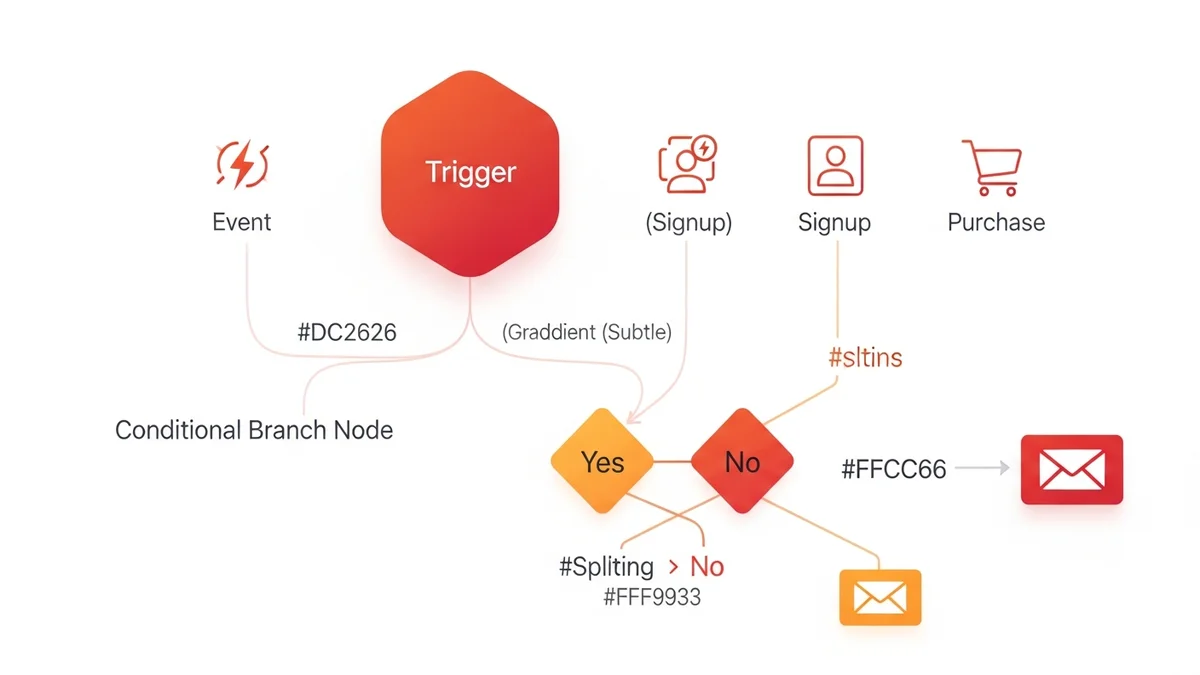
Sketch out every branch. What happens if someone clicks the sales email link but doesn't buy? What happens if they do buy — do they exit the funnel and enter a customer sequence? What happens if they don't open the first three emails? These conditional paths are what separate a real automation funnel from a glorified newsletter schedule. Software makes this easy to build, but only if you've already decided what the logic should be.
Step 3: Choose Your Tools
You need at minimum: a way to capture leads (landing page or form), an email service provider with automation capabilities, and ideally a CRM or tagging system that tracks behavior. Many all-in-one platforms combine these. If you're starting from scratch, Systeme.io offers a generous free tier that includes email automation, funnels, and up to 2,000 contacts at no cost — a legitimate option for early-stage operators who don't want to stitch together five tools.
For more advanced conditional logic, behavioral triggers, and deep segmentation, ActiveCampaign is the platform most professional funnel builders reach for. Its automation builder supports if/then branching, lead scoring, and CRM integration that lets you move contacts through stages based on real behavior rather than time delays alone.
Agencies and teams running funnels for multiple clients often standardize on GoHighLevel, which wraps CRM, email automation, SMS, and funnel pages into a single account structure that can be white-labeled.
Newsletter
Get the latest SaaS reviews in your inbox
By subscribing, you agree to receive email updates. Unsubscribe any time. Privacy policy.
Step 4: Build Your Opt-In and Lead Magnet Delivery
Your landing page needs one job: convert. Remove navigation menus, reduce decision points, and make the benefit of subscribing obvious in the headline. The confirmation and delivery emails that follow the opt-in are often neglected — but they're the first impression your automation makes. Deliver the lead magnet immediately, then use the thank-you email to tell subscribers exactly what to expect next and when.
Step 5: Write the Email Sequences
Write your welcome sequence (3–5 emails), your nurture sequence (5–10 emails depending on sales cycle length), and your conversion sequence (3–7 emails with a hard close) before you build anything in software. Editing copy inside most email editors is painful. Writing in a document, then importing, saves hours. Each email should have a single call to action. The subject line should create curiosity or promise a specific benefit — not both at once.
Step 6: Configure Triggers, Tags, and Conditions
This is the step that turns a sequence into a funnel. Set up:
- Entry trigger: Form submission, link click, purchase, or date-based
- Exit conditions: Purchase made → remove from sales sequence, tag as customer
- Conditional branches: Opened email 3 but didn't click → send follow-up variant; didn't open → resend with different subject
- Goal tracking: Define the conversion event so your platform knows when the funnel succeeded
Skipping exit conditions is the most common setup error. A subscriber who buys on email two should never receive the pitch on email seven. That experience tells your customer that your system doesn't know who they are — which is exactly the opposite of what automation should accomplish.
Step 7: Test Before You Go Live
Send yourself through the entire funnel as a test subscriber. Click links, trigger conditions, and verify that tags apply correctly. Check every email on mobile — over 60% of emails are read on mobile devices, and a broken layout in the first welcome email is a fast way to lose a subscriber you just paid to acquire. Verify that your unsubscribe links work and that your sender domain is authenticated with SPF, DKIM, and DMARC records. Poor deliverability settings mean your perfectly written funnel lands in spam and generates zero data.
Comparing the Best Email Automation Funnel Tools
The right tool depends on your business model, technical comfort, and whether you need an all-in-one platform or best-of-breed email automation connected to a separate funnel builder. Here's an honest comparison of the most relevant options for this use case:
| Platform | Entry Price | Free Plan | Automation Depth | Best Fit |
|---|---|---|---|---|
| ActiveCampaign | $29/month (1,000 contacts) | No (14-day trial) | Advanced (branching, lead scoring, CRM) | B2B funnels, complex sequences |
| Kartra | $99/month | No (30-day trial at $1) | Advanced (behavioral triggers, tagging) | All-in-one course/membership funnels |
| GoHighLevel | $97/month | No (14-day trial) | Advanced (multi-channel + CRM) | Agencies managing client funnels |
| Systeme.io | $0/month (up to 2,000 contacts) | Yes | Moderate (linear automations, basic tags) | Beginners and solo operators |
| ClickFunnels | $97/month | No (14-day trial) | Basic (Follow-Up Funnels built-in) | Sales page-focused funnels |
One observation worth making: ActiveCampaign's $29 entry price is genuinely accessible, but the automation features that make it worth using — conditional logic, CRM integration, lead scoring — are mostly gated behind the Plus tier at $49/month and above. Budget accordingly. Kartra, on the other hand, delivers more integrated functionality at its $99 base tier, which makes it a better comparison to ClickFunnels than the headline prices suggest.
The Mistakes That Kill Email Automation Funnels
Automating Before You've Validated the Message Manually
The fastest way to build a broken funnel is to automate a message that hasn't been proven to convert. Send those emails manually to your first 50 subscribers. See what questions people ask, what they click, what makes them reply. That data tells you what to automate. Skipping this step means you're scaling a message that may not work at all.
Not Segmenting Your Entry Points
A subscriber who opted in for a "how to start a podcast" checklist should receive very different emails than someone who opted in from a "podcast monetization" webinar. If both enter the same generic welcome sequence, you're already treating people like numbers. Tag by source. Build different sequences or at minimum different opening angles based on the lead magnet that brought each subscriber in.
Ignoring Deliverability Until It's a Problem
Email deliverability is not a set-and-forget configuration. High complaint rates, sending to unengaged lists, and missing authentication records compound over time. By the time your open rates have dropped from 35% to 12%, you have months of reputation damage to repair. Segment inactive subscribers after 60 days. Run re-engagement campaigns at 90 days. Remove non-responders before they drag down your sender score.
Optimizing Emails Instead of the Funnel
If your funnel isn't converting, the instinct is to rewrite email subject lines. That's rarely where the problem lives. More often, the issue is in the offer, the lead magnet quality, the landing page conversion rate, or the exit conditions that are letting buyers stay in the pitch sequence. Diagnose at the funnel level before you edit at the email level.
The Right Mindset for Email Automation That Actually Converts
There's a persistent myth that automation makes email marketing impersonal. In practice, the opposite is true. A subscriber who downloads your lead magnet at 2 AM and gets an immediate, relevant, well-written welcome email has a better experience than a subscriber who waits three days for a manual follow-up that arrives when you happened to remember to send it. Consistency and relevance are what make email feel personal — not the fact that you typed it by hand.
The best funnels don't feel automated because they're designed around what the subscriber needs at each stage, not around what's convenient for the sender to send. That requires upfront thinking, decent tooling, and a willingness to iterate. But once it's running, a properly built email automation funnel is the closest thing to a consistent, scalable sales process that doesn't require you to be online for it to work.
If you're still evaluating which platform to anchor your funnel on, our reviews of Kartra and GoHighLevel go deep on the automation capabilities that matter most for long-form funnel sequences. Neither tool is perfect, but both handle the behavioral logic that separates real funnels from scheduled broadcast lists.
Start with your goal, map the journey, then pick the tool that supports the logic your funnel needs. In that order. Every time.