
Cart Abandonment vs. Checkout Abandonment — Why the Distinction Changes Everything
Most ecommerce teams use "cart abandonment" and "checkout abandonment" as synonyms. That mistake leads to misaligned fixes and wasted budget. They describe different failure points at different stages of the buying journey, and they require different solutions.
Cart abandonment happens at any stage before the customer enters the checkout flow — browsing, adding items, then leaving without engaging the checkout process at all. Checkout abandonment happens after the customer has already started entering their information. Confusing the two means you might pour resources into cart recovery emails when your actual problem is a broken payment form or a surprise shipping fee appearing on page three of five.
Understanding precisely where customers drop off is step one. The formula for cart abandonment rate is straightforward: divide the number of completed purchases by the number of carts created, multiply by 100, and subtract from 100. If 1,000 shoppers add to cart and 300 complete a purchase, your abandonment rate is 70%. The question worth obsessing over is not the number itself — it is which portion of that 70% is recoverable friction you introduced, versus genuine browsing behavior that was never going to convert.
Think in Two Funnels, Not One
The standard ecommerce mental model is a single linear funnel: product page → add to cart → checkout → payment → success. This simplification is useful for reporting but masks two distinct failure modes that require completely different interventions.
Funnel A: Cart to Checkout Completion
This funnel is about continuation — keeping a customer moving forward after they have expressed purchase intent. The levers here are cart persistence, return behavior, and entry friction into the checkout flow itself. A cart that vanishes when a user closes the browser actively punishes indecision. A persistent cart, stored against a user identity or a long-lived cookie, keeps items waiting for days or even weeks. The key architectural distinction is separating the persistent cart (which can survive across sessions) from the checkout session, which should lock pricing, taxes, and shipping quotes for a shorter window to avoid stale data and inventory mismatches.
Smart recovery reminders also belong to this funnel. Generic "you forgot something" emails are easy to ignore. Effective recovery messages name the specific product, display the price, link directly back to a preserved cart, and — when appropriate — surface a relevant incentive. Timing is critical: reminders sent within the first hour of abandonment consistently outperform those sent 24 hours later.
Funnel B: Payment Attempt to Approval
This funnel is about completion. Once a customer reaches the payment step, a new set of failure modes emerges: payment method mismatch, authentication friction (3DS prompts, CAPTCHA), and soft declines that leave the customer confused about whether their purchase went through. When a payment fails and the customer does not understand why, they rarely retry correctly — they abandon entirely. That abandonment inflates your overall rate with transactions that were never solvable through UX changes. They were payment infrastructure problems. Fixing your email automation will not recover a customer whose card was incorrectly flagged for fraud.
Treating these as one funnel is why so many checkout optimization projects underdeliver. You need separate diagnostic questions for each: "Why aren't users reaching payment?" belongs to Funnel A. "Why are payment attempts failing?" belongs to Funnel B.
The Real Reasons Customers Abandon at Checkout
Research consistently points to the same cluster of root causes. Understanding the mechanism behind each one matters because the fix for cost surprise is entirely different from the fix for payment method gaps.
Unexpected Costs at the Final Step
Surfacing shipping fees, taxes, and currency conversion charges only at checkout is the single most common abandonment trigger. Customers form a mental price commitment when they add an item to the cart. Any number that appears higher at checkout feels like a broken promise — not just an inconvenience, but a breach of trust that damages the brand relationship beyond the current session. The fix is not to eliminate fees (often impossible), but to move them earlier. Show shipping estimates on the product page or in the cart view. Let customers know the full landed cost before they invest time entering their details.
Mandatory Account Creation
Requiring account creation before purchase is a gate that converts poorly for first-time buyers. Many shoppers, particularly those who found you through a paid ad or a referral, want a single fast transaction. The cognitive cost of creating a password and confirming an email — before they have even experienced your product — is disproportionate to any benefit the customer receives. Guest checkout is not optional for a high-converting store. You can prompt account creation post-purchase, when the customer is already committed and has something to gain from saving their details.
Newsletter
Get the latest SaaS reviews in your inbox
By subscribing, you agree to receive email updates. Unsubscribe any time. Privacy policy.
Multi-Page and Slow Checkouts
Every additional page in a checkout flow is an exit opportunity and a decision point where second thoughts can take hold. Multi-step checkouts extend the time-to-purchase and create psychological distance between the customer's original intent and the moment of commitment. Website performance compounds this: slow load times and unstable page elements increase abandonment independently of how well-designed the checkout layout is. A beautifully designed checkout that takes four seconds to load on mobile will still bleed conversions.
Insufficient Payment Options
A portion of your customer base will not share credit card information with a brand they have not transacted with before. For these customers, PayPal, Apple Pay, Google Pay, or buy-now-pay-later options like Klarna are not preferences — they are requirements. Failing to offer them means losing buyers who had genuine purchase intent and the funds available. This is a particularly acute problem for newer or niche brands without established trust signals.
Indecision Caused by Unanswered Questions
Some abandonment is not about process friction — it is about doubt that was never resolved. Customers unsure about sizing, return policies, product quality, or compatibility will hesitate at the moment of payment. The mistake is treating this as a purely behavioral issue outside your control. Placing trust signals, review excerpts, return guarantees, and product-specific reassurances on the checkout page itself — not buried in footer links — directly addresses the doubt at the moment it peaks.
Six Strategies That Actually Move the Needle
1. Implement Persistent Carts with Separate Checkout Sessions
Store cart contents against a user identity or a durable cookie so they survive session expiry. Separate this from your checkout session, which should lock quotes for a shorter window to prevent stale pricing. This distinction prevents the double failure of customers losing cart contents on one side and encountering price discrepancies on the other.
2. Show All Costs Before Checkout Begins
Calculate and display estimated shipping, applicable taxes, and any required fees at the cart stage. The goal is to make checkout a confirmation, not a discovery. Customers who arrive at checkout already knowing the full price convert at substantially higher rates because their decision is already made.
3. Remove Account Creation as a Gate
Make guest checkout the default, prominent path. Collect email for order confirmation — that alone gives you the ability to run cart recovery sequences without requiring a password. Post-purchase, offer account creation as a convenience feature ("Save your details for faster checkout next time") rather than a prerequisite.
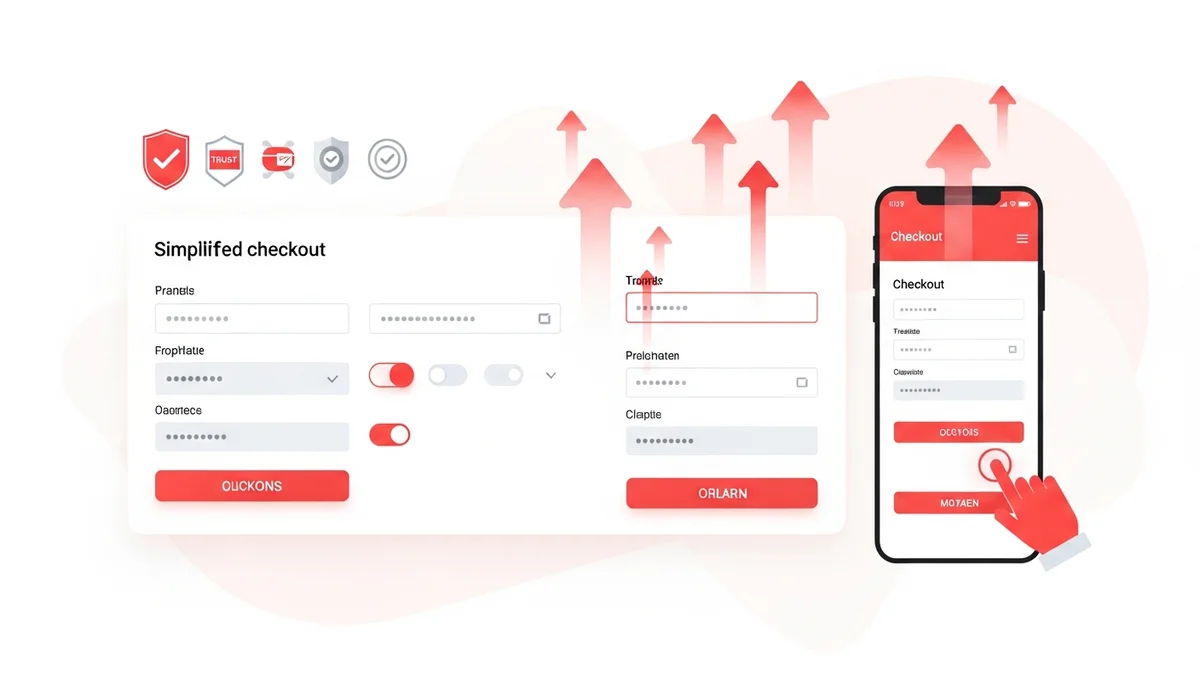
4. Compress the Checkout Flow to One or Two Steps
One-page or two-step checkout architectures outperform multi-page flows in almost every test because they reduce exit points and maintain forward momentum. SamCart is built specifically around this principle — its one-page checkout with order bumps and upsells is designed to maximize revenue per checkout session without adding friction. For full-funnel builds where checkout is part of a longer sequence, ClickFunnels gives you granular control over every step in the flow with A/B testing to validate improvements. If you need a fast, low-cost checkout embedded in an existing site, Systeme.io offers a straightforward checkout builder on its free plan.
5. Place Trust Signals at the Payment Step
Security badges, money-back guarantee statements, review highlights, and clear return policy summaries belong on the checkout page itself — not just on the homepage or product pages. Doubt peaks at the moment of payment. That is where social proof and risk-reduction messaging earn their conversion value.
6. Build Behavioral Recovery Sequences, Not Blast Emails
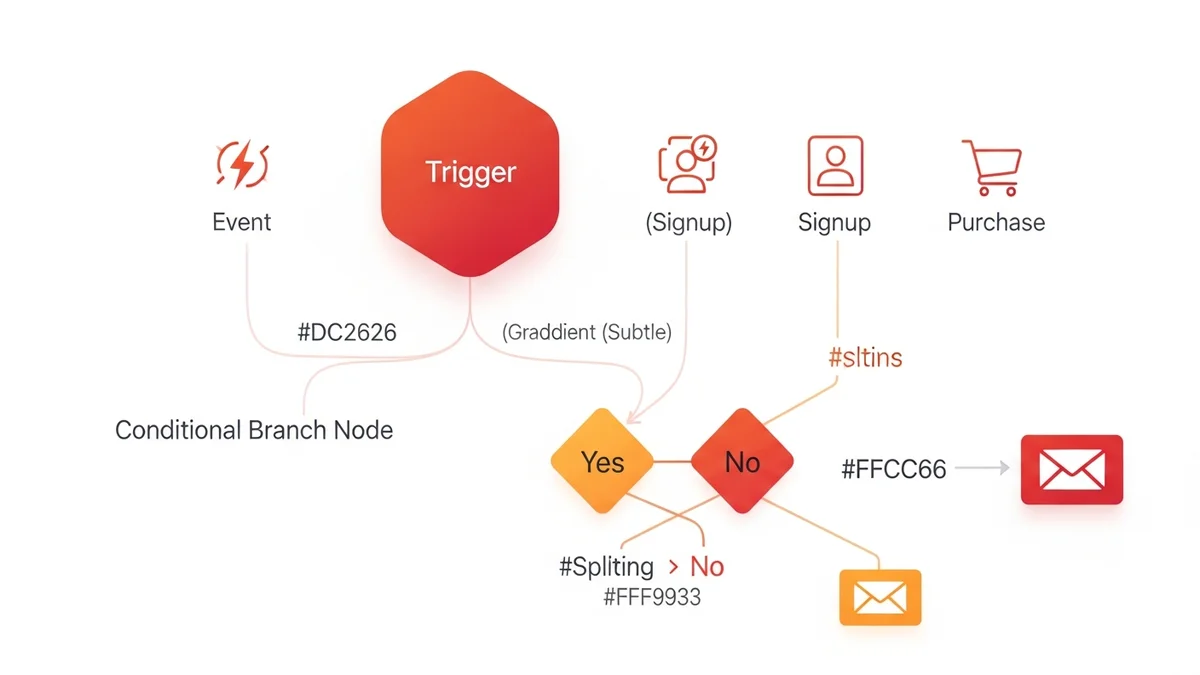
Effective cart recovery sequences are specific and timely. They name the product, show the image and price, link back to a preserved cart, and deploy within the first hour of abandonment. ActiveCampaign supports behavioral triggers that fire based on specific checkout abandonment events rather than just time delays, which makes personalization practical at scale. Kartra goes further by connecting cart abandonment directly to membership access rules and multi-step automation sequences — useful for digital product sellers where the abandoned item is a course or subscription.
Comparing Checkout Optimization Capabilities Across Key Tools
The right tool depends on which bottleneck you are actually solving. Here is a direct comparison of how leading funnel and checkout platforms approach the core optimization levers.
| Tool | One-Page Checkout | Cart Recovery Automation | Guest Checkout | Order Bumps / Upsells | Payment Method Support |
|---|---|---|---|---|---|
| SamCart | Yes (core feature) | Yes (built-in) | Yes | Yes (one-click) | Stripe, PayPal, Apple Pay |
| ClickFunnels | Yes (configurable) | Yes (via follow-up funnels) | Yes | Yes (order bumps) | Stripe, PayPal, and integrations |
| Kartra | Yes | Yes (behavioral automation) | Yes | Yes | Stripe, PayPal, Braintree |
| Systeme.io | Yes | Yes (basic) | Yes | Yes (order bumps) | Stripe, PayPal |
| ActiveCampaign | Via integrations | Yes (advanced behavioral) | Depends on cart platform | Via integrations | Via integrations |
The table makes the tradeoffs clear: SamCart and ClickFunnels are purpose-built checkout and funnel tools where the checkout experience is a first-class concern. ActiveCampaign is the right choice when your checkout abandonment is primarily a recovery sequence problem and you already have a capable checkout layer in place. Kartra makes the most sense when checkout is tightly coupled with digital product delivery, membership access, and multi-touch automation — the platform is designed for exactly that integration.
Metrics to Track Beyond Abandonment Rate
Cart abandonment rate is a headline number. It tells you there is a problem; it does not tell you where. These supporting metrics are what actually guide you toward the right fix.
Checkout Start Rate
What percentage of cart sessions actually enter the checkout flow? A low checkout start rate signals a pre-checkout problem: shipping estimate surprise, insufficient trust on the cart page, or a weak call-to-action. Fixing your checkout page layout will not solve a problem that occurs before the customer gets there.
Payment Attempt Rate
Of users who reach the payment step, how many actually submit a payment? A significant gap here points to last-minute cost surprise, payment method gaps, or a trust breakdown at the final step. This is distinct from checkout start rate because it isolates the payment step specifically.
Payment Success Rate
Of payment attempts, how many succeed? A low success rate is almost never a UX problem — it is a payment infrastructure problem. Soft declines, overly aggressive fraud filters, and card network issues all show up here. The fix is working with your payment processor on decline rules and authentication flows, not redesigning your button layout.
Recovery Rate from Abandonment Sequences
Track the conversion rate from cart recovery emails as a standalone metric, not just opens or clicks. This tells you how much revenue your sequences are actually recapturing and whether increased investment in behavioral automation is returning proportional results. If your recovery rate is low despite reasonable send volume, the problem is usually message relevance or timing — not the recovery strategy itself.
Checkout optimization is fundamentally a diagnostic exercise before it is a design exercise. The stores that recover the most abandoned revenue are not the ones that implement every best practice simultaneously — they are the ones that identify their specific failure point, fix it precisely, and measure the result before moving to the next lever. Start with where customers are actually leaving, not where you assume they are.