
Why Most Sales Funnels Fail Before They Start
Here's a hard truth: the majority of businesses that try to build a sales funnel do it backwards. They pick a tool, slap together a landing page, send a few emails, and wonder why revenue never materializes. The problem isn't the tool. It's the absence of a system.
A sales funnel is not a single page or a single email. It's a guided journey that moves a complete stranger through awareness, trust, and eventually a purchase — ideally more than once. The original AIDA model (Attention, Interest, Desire, Action) dates back to 1898, and while its bones are still valid, the modern buyer's journey looks nothing like a tidy linear chute. Today's buyers loop, pause, consult Reddit, get retargeted on Instagram, and convert via mobile while waiting for an Uber. Your funnel has to account for all of that.
This guide breaks down exactly how to build a sales funnel from scratch in 2026 — with the right stages, the right tools, and the strategic thinking that separates funnels that actually convert from ones that collect dust.
What a Sales Funnel Actually Is (and What It's Not)
A sales funnel is a structured sequence of touchpoints designed to move a prospect from first awareness of your brand to a completed purchase — and ideally, into a repeat buyer. The "funnel" metaphor exists because you always start with a large pool of prospects and end with a smaller group of customers. That's normal. Your job is to make the conversion rate at each stage as high as possible.
What a sales funnel is not: a single landing page, a pop-up, or a one-off email campaign. Those are components. The funnel is the architecture that connects them.
The clearest benefit of a properly built funnel is automation. Once your funnel is live, it attracts leads, delivers value, builds trust, and closes sales around the clock — without you personally intervening at every step. That's the actual promise of funnel software, and it's why so many businesses invest heavily in building them correctly.
The 5 Stages of a High-Converting Sales Funnel
Every effective funnel — regardless of industry, product type, or price point — moves through five core stages. Skip or rush any of them, and you introduce friction that kills conversions downstream.
Stage 1: Awareness
Before anyone can buy from you, they have to know you exist. The awareness stage is about getting in front of the right people through channels they already use: YouTube, organic search, social media, paid ads, or podcast appearances. Your content here doesn't need to sell anything. It needs to earn attention and establish relevance. A well-produced YouTube video, a genuinely useful blog post, or a short-form TikTok clip can all function as the top of your funnel.
Stage 2: Lead Generation
Once you have attention, you need to capture it. This is where you exchange something valuable — a free guide, checklist, mini-course, template, or workshop — for an email address. This "lead magnet" is the bridge between cold traffic and a warmed-up prospect you can continue to communicate with.
The quality of your lead magnet matters enormously. A vague "newsletter signup" converts poorly. A highly specific, immediately useful resource (like "The 7-Point Checklist to Audit Your Current Sales Funnel in 30 Minutes") converts significantly better because it signals to the right audience that you understand their specific problem.
Stage 3: Nurture
This is where most funnels completely fall apart. You've captured a lead. Now what? If your answer is "send them to the sales page immediately," you're leaving enormous revenue on the table. Cold leads don't buy. Warm leads do.
Nurturing happens through email sequences, video content, case studies, and stories that build genuine trust over time. A well-structured nurture sequence might run 5–10 emails over two weeks, each one delivering value while slowly introducing your offer. Tools like ActiveCampaign are built specifically for this kind of behavioral email automation — segmenting leads based on what they click, what they ignore, and how engaged they are.
Stage 4: Conversion
The conversion stage is where the sale actually happens. This could be a sales page, a webinar, a live launch event, or a challenge funnel. The mechanism you choose should match the complexity and price point of your offer. A $27 digital product can convert directly from a sales page. A $2,000 coaching program typically needs a webinar or discovery call sequence to justify the investment.
Your conversion page needs to do three things: address objections, establish credibility, and create genuine urgency. Without all three, even warm leads will hesitate at the checkout.
Stage 5: Retention and Ascension
The sale is not the finish line — it's the starting gun for the most profitable part of your funnel. Existing customers are dramatically easier to sell to than cold prospects. The retention stage keeps buyers engaged through onboarding sequences, community access, and ongoing value delivery. The ascension stage introduces higher-ticket offers, renewals, and upsells to increase customer lifetime value.
Businesses that ignore post-purchase funneling are constantly on a hamster wheel of new customer acquisition. The ones that build retention sequences and ascension paths generate compounding revenue from the same customer base.
How to Build Your Sales Funnel Step by Step
Understanding the stages is one thing. Actually building the funnel is another. Here's the practical sequence:
Step 1: Define Your Audience and Their Core Problem
Before you touch any funnel software, get crystal clear on who you're building for and what specific problem your offer solves. "Small business owners" is not an audience. "E-commerce store owners doing $10K–$50K per month who are losing sales to abandoned carts" is an audience. The more specific your targeting, the more relevant every stage of your funnel will feel — and the higher your conversion rates will be across the board.
Newsletter
Get the latest SaaS reviews in your inbox
By subscribing, you agree to receive email updates. Unsubscribe any time. Privacy policy.
Step 2: Create a High-Value Lead Magnet
Your lead magnet should solve one specific, immediate problem for your target audience. It needs to be something they would realistically pay for — but you're giving it away to build the relationship. Common high-converting formats include: PDF guides, video mini-courses, Notion templates, email challenges, and free tools or calculators.
Step 3: Build Your Landing Page
Your opt-in landing page has one job: get the email address. Remove navigation menus, eliminate distractions, and focus every element of the page on a single call to action. A strong headline that speaks directly to the visitor's pain point, three to five bullet points on what they'll get, and a simple form is all you need. Tools like Leadpages and Instapage are built specifically for high-converting opt-in pages with built-in A/B testing to optimize performance over time.
Step 4: Set Up Your Email Automation
Once someone opts in, your automated email sequence takes over. A strong welcome sequence typically runs 5–7 emails: email one delivers the lead magnet and sets expectations, emails two through four deliver additional value and build authority, and emails five through seven introduce your offer with social proof and a clear call to action. Map this sequence before you build it — knowing the destination makes writing each email significantly easier.
Step 5: Build Your Sales or Conversion Page
Your sales page needs to walk a prospect through the full decision-making process: identify the problem, agitate it, introduce your solution, prove it works (testimonials, case studies, results), handle objections, and close with a clear offer and call to action. For higher-ticket offers, pair this with a webinar or video sales letter to build the additional trust needed before a larger purchase decision.
Step 6: Add Order Bumps and Upsells
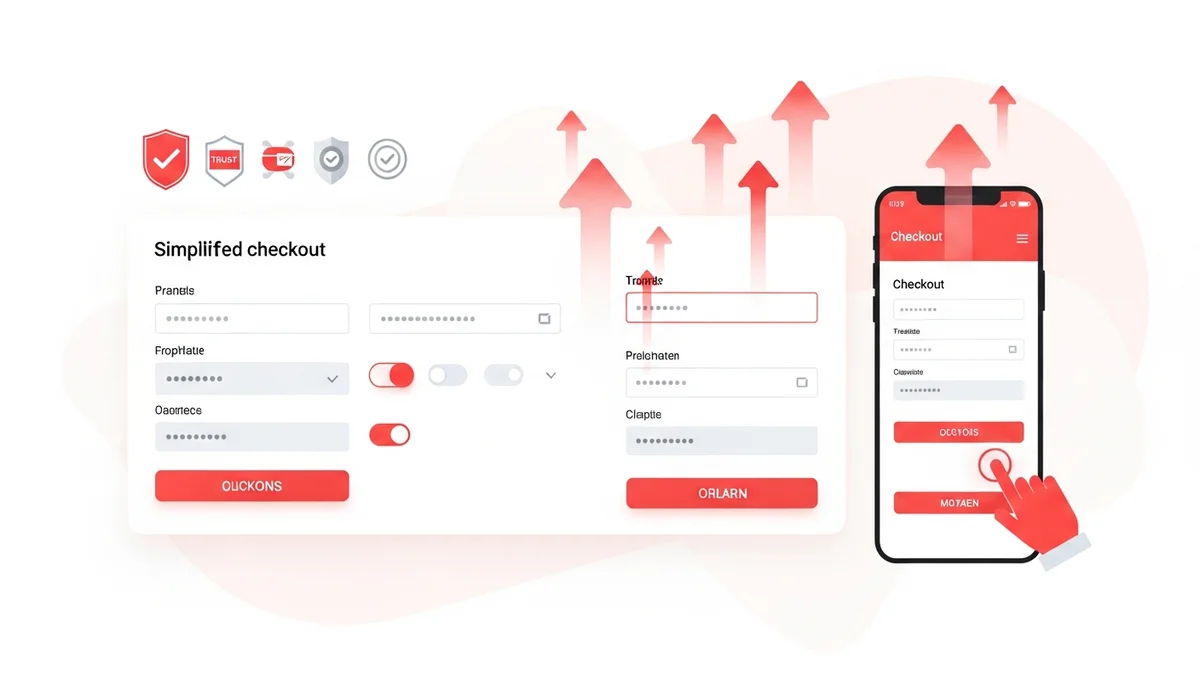
Don't leave the checkout experience bare. An order bump — a small, complementary offer presented on the checkout page — routinely increases average order value by 20–35% with minimal friction. Post-purchase one-click upsells can stack additional revenue without requiring the customer to re-enter payment information. Tools like SamCart are specifically designed to maximize checkout revenue through intelligent upsell sequencing.
The 5 Funnel Types That Actually Work
Not every funnel is built the same way. The right funnel type depends on your offer, your audience temperature, and your sales process.
1. Lead Magnet Funnel
The foundational funnel for any business. Traffic → opt-in page → lead magnet delivery → nurture sequence → offer. This is where virtually every funnel starts, and it's the fastest way to begin building an email list you actually own.
2. Webinar Funnel
Highly effective for mid-to-high ticket offers ($500–$5,000+). The webinar functions as both the nurture mechanism and the conversion event. Live webinars tend to convert at higher rates than automated ones, but automated webinar funnels scale better once the presentation is proven.
3. Evergreen Sales Funnel
A fully automated funnel that converts without live launches or manual intervention. Traffic flows in continuously, gets nurtured via email, and converts to a sales page — often with an artificial but honest urgency mechanism like a countdown timer tied to opt-in date. This is the goal for most businesses: a funnel that generates revenue consistently without requiring constant attention.
4. Product Launch Funnel
Used for time-limited offers and new product releases. The launch funnel builds anticipation through pre-launch content (often three videos or emails), opens the cart for a defined window, and closes with urgency. This funnel type generates significant revenue in short bursts but requires more manual orchestration.
5. Membership Funnel
Designed to convert prospects into recurring subscribers. Typically structured as: waitlist → founders offer → evergreen flow. The goal is predictable monthly recurring revenue rather than one-time transactions, which fundamentally changes how you think about your cost-per-acquisition.
Choosing the Right Funnel Builder for Your Business
The tool you choose to build your funnel matters — but it matters less than your strategy. That said, the wrong tool creates unnecessary friction and limits what you can build. Here's an honest breakdown of the major options:
| Tool | Starting Price | Best For | Key Strength |
|---|---|---|---|
| ClickFunnels | $97/month | All-in-one funnel building | Pre-built funnel templates and checkout flows |
| Kartra | $99/month | Courses, memberships, and automation | Full marketing suite in one platform |
| GoHighLevel | $97/month | Agencies and service businesses | CRM, SMS, and white-label capabilities |
| Leadpages | $37/month | Lead generation landing pages | Fast setup, high-converting templates |
| Systeme.io | $0/month (free plan) | Beginners and solopreneurs | All-in-one at the lowest price point available |
| ActiveCampaign | $15/month | Email automation and CRM | Most powerful behavioral email sequencing |
| SamCart | $59/month | Checkout and upsell optimization | Order bumps and one-click upsell flows |
The honest analysis: if you're starting from zero, Systeme.io's free plan gives you everything you need to validate your funnel before spending a dollar on software. Once you're generating consistent revenue, ClickFunnels or Kartra offer more sophisticated capabilities. If email automation is your primary lever, ActiveCampaign is in a different class than most all-in-one platforms when it comes to behavioral triggers and segmentation.
The Biggest Funnel Mistakes (and How to Avoid Them)
After reviewing hundreds of funnels, the same failure patterns appear repeatedly:
Mistake 1: Building for Traffic You Don't Have Yet
A beautifully designed funnel with no traffic source is an expensive piece of digital architecture that generates zero revenue. Before you spend weeks perfecting your funnel, identify your traffic strategy. Organic SEO, paid ads, social content, or partnerships — choose one and commit to it before obsessing over funnel optimization.
Mistake 2: Sending Leads Directly to a Sales Page
This works for low-ticket impulse purchases with warm audiences. For almost everything else, it burns leads you worked hard to acquire. Build the nurture sequence. Even a three-email sequence between opt-in and pitch will meaningfully improve conversion rates.
Mistake 3: Investing in Automation Without a Clear Funnel Strategy
As one analysis of SME marketing found, businesses that adopt AI or automation tools without a structured funnel "often struggle to measure or realise returns." The tool is never the strategy. Map your funnel on paper before you build it in software. Know your offer, your audience, and the specific path from stranger to customer before you open a single builder.
Mistake 4: Ignoring Post-Purchase Revenue
The most expensive customer is the first-time buyer. The most profitable customer is the one you've already converted. Building even a basic post-purchase sequence — a thank-you email, an onboarding flow, a 30-day check-in, and an upsell offer — can dramatically improve the economics of your entire funnel by increasing customer lifetime value without increasing acquisition cost.
Mistake 5: Never Testing Anything
Your first funnel will not be your best funnel. The businesses generating predictable revenue from their funnels are running continuous split tests on headlines, lead magnets, email subject lines, and checkout page layouts. Treat your funnel as a living system, not a finished product. Even a 5% improvement in opt-in rate compounds significantly over time at scale.
The Right Mindset for Building Funnels That Last
A sales funnel is not a shortcut. It's a system — and like any system, it requires intentional design, proper implementation, and ongoing iteration. The businesses that generate consistent, scalable revenue from funnels aren't doing anything magical. They've mapped their customer journey, built each stage deliberately, chosen tools that match their actual needs, and committed to testing and improving over time.
Start with the fundamentals: know your audience, build a lead magnet worth having, write an email sequence that delivers real value, and create a conversion mechanism that matches your offer. Then choose a funnel builder that fits where you are right now — not where you hope to be in three years. Get the funnel working first. Optimize it later. Revenue validates everything.
The difference between a funnel that works and one that doesn't almost always comes down to the quality of thinking that went into it before anyone opened a software tool. Get that thinking right, and the rest becomes significantly easier.