
What A/B Testing Actually Is (and What It Isn't)
A/B testing is a controlled experiment where you show two versions of a landing page to different segments of your audience and measure which one converts better. That's the clean definition. But the practical reality is that most marketers either skip testing entirely, test the wrong things, or misread results and draw the wrong conclusions.
Before you run a single test, you need to understand the terminology — because the words matter more than people realize.
A/B Testing vs. Split Testing vs. Multivariate Testing
These three terms get thrown around interchangeably, but they're not the same thing:
| Test Type | What You're Comparing | Best Used When |
|---|---|---|
| A/B Testing | Two versions with one changed element (button color, headline, etc.) | You want to isolate the impact of a single change |
| Split Testing | Two completely different page designs | You're testing entirely different messaging or layout concepts |
| Multivariate Testing | Multiple elements changed simultaneously | You have high traffic and need to find the best combination of changes |
For most businesses running under 50,000 monthly visitors, A/B testing is the right approach. Multivariate testing requires significantly more traffic to reach statistical significance across all variable combinations, and most sites simply don't have it. Start with A/B tests, get wins, then scale up.
Key Terms You Need to Know
The control is your existing page — the one you're trying to beat. The variant is the new version you're testing. The version that wins becomes the champion, and any future test you run pits a new challenger against that champion. Statistical significance is the confidence threshold that tells you your results reflect real user behavior and not random noise.
Why Your Landing Pages Need A/B Testing Right Now
Here's the uncomfortable truth: most landing pages are built on assumptions. Your designer thinks the headline is clear. Your copywriter believes the CTA is compelling. Your CMO likes the hero image. But none of that matters if visitors aren't converting. Without testing, you're spending money driving traffic to a page that may be losing you half your potential customers.
Landing pages sit at the most critical point in your entire marketing funnel. They're where ad spend meets conversion. Every percentage point of improvement compounds across your entire campaign budget. A page converting at 3% versus 4.5% doesn't sound dramatic until you realize that's 50% more leads from the same traffic spend.
Tools like Unbounce and Leadpages have built A/B testing directly into their platforms because the data is unambiguous: marketers who test consistently outperform those who don't. This isn't a nice-to-have feature. It's table stakes for any serious conversion optimization effort.
What to Test First: Priority Order Based on Real Data
Not all tests are created equal. The research is clear on which elements deliver the most conversion lift, and the order matters when you have limited time and traffic. Here's what the data actually shows:
1. Form Length — The Highest-Impact Change You Can Make
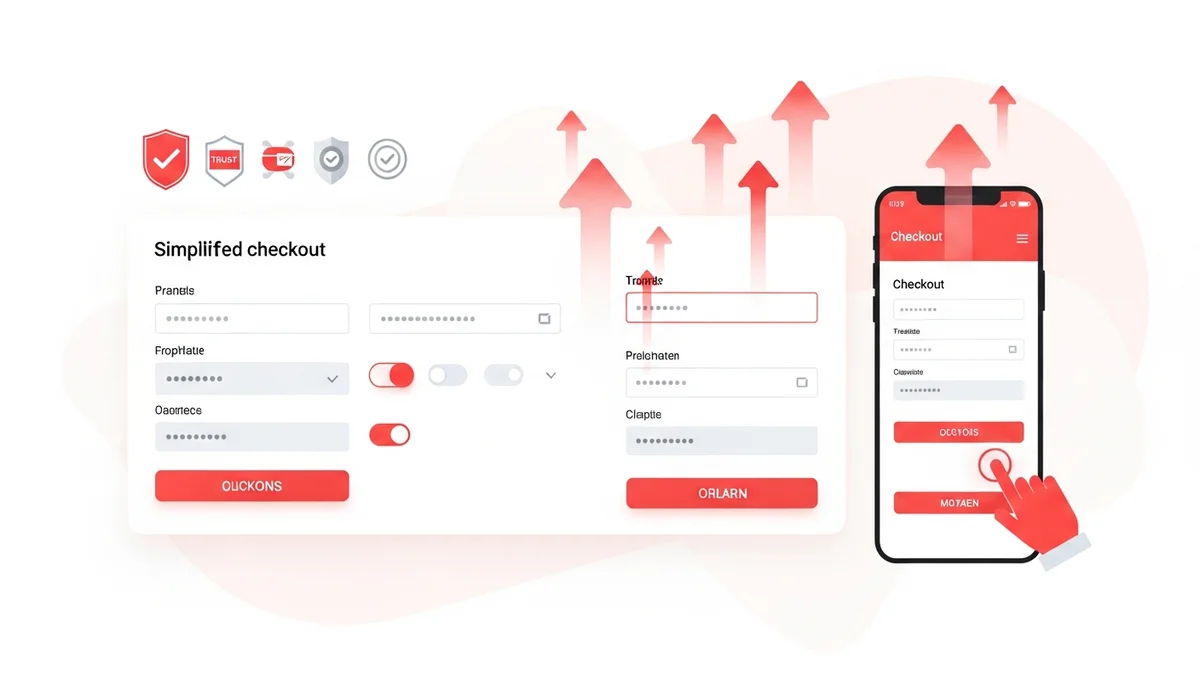
Research from Imagescape found that shortening a form from 11 fields to 4 fields produced a 120% increase in conversions. That's the single largest documented lift from any one change across thousands of A/B tests. If your landing page form is asking for company size, phone number, job title, and LinkedIn profile before someone can download a PDF, you're bleeding conversions.
The principle is simple: collect only what you need at the point of conversion. First name and email is almost always enough. You can qualify leads further after they've opted in, through onboarding flows or follow-up sequences. Don't let your CRM's wish list override your conversion rate.
2. Headline Clarity — Your Five-Second Test
Headline optimization has been shown to produce conversion lifts of 27% to 104% depending on the change. The bar is straightforward: a visitor who has never heard of your product should be able to explain your offer after reading your headline. If they can't, you have a clarity problem that no amount of traffic will fix.
Test benefit-focused headlines against feature-focused ones. Test specificity versus broad claims. "Get more leads" is weaker than "Double your lead volume in 30 days." One sets an expectation; the other makes a promise.
3. CTA Copy — Tiny Words, Massive Impact
One case study found that changing a CTA from "Sign up for free" to "Trial for free" produced a 104% increase in trial start rate. The reason is psychological: "sign up" implies ongoing commitment, while "trial" signals a temporary, low-risk evaluation. The word "trial" removes an invisible barrier in the visitor's mind.
Newsletter
Get the latest SaaS reviews in your inbox
By subscribing, you agree to receive email updates. Unsubscribe any time. Privacy policy.
This is why testing CTA copy should always be on your list. Words like "Get," "Start," and "Try" carry different psychological weights. Test them against each other with actual traffic before you settle on any one option.
4. Social Proof Placement
Effective social proof has been shown to deliver 19–34% conversion lift, but placement is the critical variable. A testimonial buried in the footer does less work than one positioned directly beside your CTA. Testimonials should include full names, photos, job titles, and — critically — specific outcomes. "Great product!" is not social proof. "Increased email revenue by 40% in three months" is.
| Element to Test | Documented Conversion Lift | Implementation Complexity |
|---|---|---|
| Form field reduction (11 → 4 fields) | 120% | Low |
| CTA copy change ("Sign up" → "Trial") | 104% | Very Low |
| Headline optimization | 27–104% | Low |
| Social proof placement | 19–34% | Low-Medium |
How to Run an A/B Test: The Step-by-Step Process
Running a test properly requires discipline. It's easy to get excited about a result and declare a winner too early, or to test so many things at once that you can't attribute any improvement to a specific change. Follow this process exactly.
Step 1: Establish Your Baseline Metrics
Before you change anything, document your current conversion rate, bounce rate, average time on page, and any other relevant metrics. You need a clear baseline to measure improvement against. If you don't know where you started, you can't know how far you've gone.
Step 2: Identify a Problem, Then Form a Hypothesis
The biggest mistake in A/B testing is testing randomly. Don't test a different button color because you're bored. Look at your analytics, watch heatmaps, check your bounce rate at specific scroll depths, and find an actual problem. Then form a specific, falsifiable hypothesis: "Changing the CTA from 'Get Started' to 'Start My Free Trial' will increase form submissions because it clarifies the zero-cost nature of the offer."
Step 3: Change One Element at a Time
This is non-negotiable. If you change your headline, your CTA, and your hero image simultaneously, and conversions improve, you have no idea which change caused it. Change one thing. Test it. Move to the next. Yes, this is slower. Yes, it's worth it.
Step 4: Split Your Traffic and Set a Duration
In most A/B tests, you'll split traffic 50/50 between your control and variant. If you're testing a new challenger against an established champion page with existing conversion data, you might run a 60/40 split to protect your known-performing version while still collecting data on the new one. Set a minimum test duration — typically at least one full business cycle (usually two weeks) — before evaluating results.
Step 5: Wait for Statistical Significance
This is where impatience kills testing programs. Looking at results after 48 hours and declaring a winner is how you make bad decisions. You need enough traffic through each variant to be confident the results reflect real patterns. Most platforms like Instapage and Kartra will calculate confidence percentages for you. Aim for 95% statistical significance before acting on results.
Step 6: Implement the Winner and Start Again
Once you've confirmed a winner, your challenger becomes the new control — the new champion. Document what worked and why you think it worked. Then start the process over with the next highest-impact element on your test list. Optimization is not a project with an end date. It's an ongoing practice.
Common Mistakes That Kill Testing Programs
Most A/B testing programs fail not because testing doesn't work, but because they're run incorrectly. These are the patterns that consistently destroy testing credibility:
Stopping Tests Too Early
The "peeking problem" is one of the most documented errors in conversion optimization. You run a test, check results after three days, see your variant is winning by 12%, and stop the test. Two weeks later, with more data, the result might have reversed entirely. Statistical significance thresholds exist precisely to protect against this. Honor them.
Testing Without a Hypothesis
Random testing generates random insights. If you can't explain why you expect a change to improve conversions before you run the test, you're not running an experiment — you're just changing things and hoping. A clear hypothesis forces you to understand the psychology behind the test and makes the result far more actionable regardless of which direction it goes.
Running Tests During Unusual Periods
Holiday seasons, major promotions, and industry events all distort visitor behavior. Traffic composition changes, purchase intent shifts, and your results won't generalize to normal operating conditions. Schedule tests during representative traffic periods.
Ignoring Segment-Level Results
A test that shows no overall winner might still reveal that your variant significantly outperforms for mobile visitors, or for traffic coming from paid search. Always look at results by device, traffic source, and visitor type before you conclude a test was inconclusive.
Choosing the Right A/B Testing Platform for Your Funnel
The tool you use for A/B testing matters because testing infrastructure that's painful to use doesn't get used. If setting up a new variant takes 45 minutes of development work, most marketing teams will find reasons to skip tests. The right platform removes that friction.
Unbounce has built A/B testing into its core product with confidence percentages displayed directly in the dashboard — you don't need to export data to a spreadsheet to interpret results. This matters because the faster you can read and act on results, the more tests you can run in a year, and volume of tests correlates directly with cumulative conversion improvement.
Leadpages offers split testing on higher-tier plans, making it a strong option for small businesses that want integrated testing without managing a separate CRO tool. Instapage goes further with heatmaps and detailed analytics alongside testing, giving you the qualitative data you need to form better hypotheses.
For teams running full funnel operations — not just top-of-funnel landing pages — Kartra includes split testing across its entire funnel builder, so you can test opt-in pages, sales pages, and order forms within the same platform. This is a meaningful advantage for businesses that want a unified picture of where their funnel is losing people.
The honest answer on tool selection: the best A/B testing platform is the one you'll actually use consistently. Pick one that fits your existing workflow, has a low barrier to creating new variants, and displays results in a way your team can act on without a statistics degree.
What to Look for in an A/B Testing Tool
- Built-in statistical significance calculation — eliminates guesswork on when a test is done
- Visual editor for variant creation — reduces dependency on developers for every test
- Traffic splitting controls — you need to control the 50/50 vs. 60/40 split
- Segment filtering — lets you analyze results by device, source, and visitor type
- Test history and documentation — your testing program is only as valuable as what you learn from it over time
The Compounding Effect of Consistent Testing
Here's what separates businesses that treat A/B testing as a one-time project from those that treat it as an operating system: the compounding effect. A single test that improves conversions by 15% is good. Ten consecutive tests that each improve conversions by 10–15% compounds into something transformational. The math on repeated modest wins outperforms the math on hoping for a single breakthrough redesign.
The businesses consistently generating the highest conversion rates aren't running one big test a year. They're running a test, declaring a winner, implementing the change, and immediately starting the next one. They treat their landing pages as permanent work-in-progress, not finished assets.
Start with your form length. That's where the data points first. If you're asking for more than four fields before conversion, cut it down and run the test. The 120% conversion lift documented in the research is the kind of result that pays for your entire optimization effort in the first month. From there, move to headline clarity, then CTA copy, then social proof placement. Each win becomes your new baseline. Each test makes the next one more valuable.
The marketers who consistently outperform their competitors aren't guessing better. They're testing more systematically, with clearer hypotheses, and using tools that make it operationally easy to run the next experiment. That's the entire playbook — and it's available to anyone willing to be disciplined enough to follow it.