
The Sales Funnel Has Changed — Here's What 2026 Actually Looks Like
The sales funnel was invented in 1898. E. St. Elmo Lewis sketched out Attention, Interest, Desire, Action — and for the better part of a century, that model held up reasonably well. Then the internet arrived, then smartphones, then algorithmic content feeds, and now AI-driven personalization at scale. The AIDA model doesn't describe how modern buyers behave. It describes how captive buyers behave, and your customers haven't been captive in a long time.
In 2026, the signals are impossible to ignore. Buyers complete 70–90% of their research before they ever speak to a sales rep. They loop back through consideration stages, get distracted by competitors on Reddit, and convert on mobile while waiting for an Uber. If your funnel is still designed as a gravity-fed chute, you are leaving serious revenue on the table.
This guide breaks down the major sales funnel trends reshaping strategy in 2026, what they mean for the tools you use, and how to build a system that actually matches how your customers buy.
Why the Traditional Funnel Model Fails in 2026
The old funnel assumed linearity. Pour leads in at the top, nurture them through the middle, extract buyers at the bottom. Clean, predictable, wrong.
The modern buying journey looks nothing like that. Consider a realistic path a prospect takes today: they discover your product through a short-form video, ignore it, get retargeted on a different platform two days later, enter their email for a discount, get distracted, validate the brand on a community forum a week later, then finally convert via an automated abandoned-browse email. That's six touchpoints across four platforms over eight days — and each one required a different kind of content and trigger.
The real problem with the classic funnel isn't that it's wrong about the stages. It's that it assumes one path through those stages. The modern funnel is a network, not a chute. Buyers enter at different points, exit and re-enter, and require orchestration across channels rather than a single campaign pushing them forward.
Even more critically, the classic funnel ends at the sale. In 2026, the sale is where the real funnel work begins. Customer lifetime value, retention loops, and post-purchase advocacy are what separate high-growth businesses from ones constantly chasing cold acquisition costs.
The 5 Dominant Sales Funnel Trends for 2026
1. Buyers Own the Top of the Funnel — and Most of the Middle
Research from MTD Sales Training makes this explicit: buyers now complete 70–90% of their research before engaging with a sales team. That's not a marginal shift — it fundamentally changes what the top of your funnel needs to do. It can no longer be a pitch. It has to be a resource.
This means long-form content, comparison pages, community presence, and organic social all become funnel infrastructure. Your SEO content, your YouTube tutorials, your Reddit engagement — that's your sales team for the first 80% of the buyer's journey. By the time someone raises their hand to talk, they've already pre-qualified (or disqualified) you. The funnel's job at TOFU in 2026 is to be the most credible, helpful voice in the room.
2. AI-Powered Personalization Is Now Table Stakes
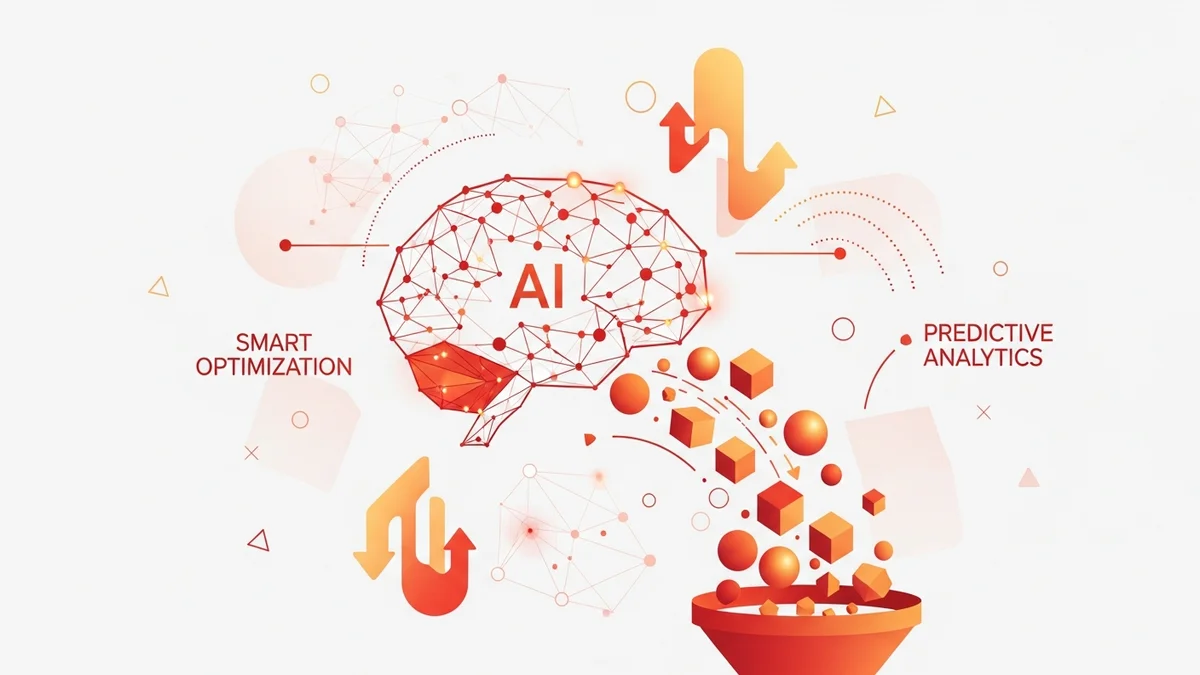
AI-optimized retargeting, behavioral email triggers, and exit-intent personalization aren't cutting-edge anymore — they're baseline. What was impressive in 2022 is now expected. Browse abandonment emails, dynamic landing pages that adapt to traffic source, and predictive lead scoring are the minimum infrastructure for a competitive funnel.
The next frontier is using AI to interpret buyer intent signals in real time. Platforms like OrbitShift are building tooling that surfaces which accounts are actively researching, which personas are engaging with content, and which external triggers — funding rounds, leadership changes, new tech stacks — correlate with purchase intent. For B2B funnels especially, this moves the conversation from volume-based prospecting to precision targeting.
3. Generic Pitches Are Dead — Consultative Selling Is Mandatory
One of the clearest trends from the MTD data is the shift from salespeople as "presenters" to salespeople as consultants and problem-solvers. Templated outreach is actively counterproductive now: buyers recognize it immediately, and it signals that you haven't done your homework.
This has direct implications for funnel design. Your mid-funnel content — email sequences, case studies, demos — needs to be segmented by problem, not by product feature. A SaaS founder and an e-commerce operator don't need the same nurture sequence even if they're buying the same software. Funnels that treat everyone the same lose at this stage.
Newsletter
Get the latest SaaS reviews in your inbox
By subscribing, you agree to receive email updates. Unsubscribe any time. Privacy policy.
4. The Circular Funnel: Post-Sale Is Where Growth Lives
High-growth businesses in 2026 aren't obsessing over acquisition alone — they're engineering post-purchase loops that turn customers into advocates. This means onboarding sequences, upsell paths, loyalty mechanics, and referral triggers are all part of the funnel architecture. The businesses still treating funnels as acquisition-only machines are paying 5–7x more per dollar of revenue than those running circular retention-focused systems.
5. Hybrid and Digital-First Teams Are the New Normal
Sales cycles are getting longer. Decision-making groups are larger. And the mix of digital self-service and human touchpoints has permanently shifted. The best-performing funnels in 2026 blend high-quality automated sequences with well-timed human intervention — not human intervention at every stage, which is inefficient, but strategically deployed conversations at the moments of highest intent.
Classic Funnel vs. Modern Funnel: Side-by-Side
| Dimension | Classic Funnel (Pre-2020) | Modern Funnel (2026) |
|---|---|---|
| Buyer research before sales contact | ~30–40% self-serve research | 70–90% self-serve research |
| Path to purchase | Linear: Awareness → Action | Non-linear: Multi-channel loops with re-entry points |
| Funnel endpoint | First purchase / closed deal | Post-sale advocacy + lifetime value loops |
| Personalization level | Segment-based (broad) | Behavioral + intent-signal based (individual) |
| Sales team role | Presenter / pitch-led | Consultant / problem-solver |
| Outreach model | Templated sequences at volume | AI-personalized, trigger-based outreach |
| Channel focus | Email + phone primary | Omnichannel: social, video, SMS, email, community |
Which Funnel Tools Are Actually Built for 2026?
The trends above aren't just strategic observations — they have direct implications for the software you choose. Not every funnel builder is architected for the circular, multi-channel, AI-assisted funnel that 2026 demands. Here's an honest assessment of where different tools fit.
All-in-One Platforms for the Circular Funnel
If you want a single platform that handles acquisition funnels, email automation, membership, and upsell sequencing — all the pieces of the circular funnel — Kartra and GoHighLevel are the strongest contenders in this category. GoHighLevel in particular has become the default choice for agencies running funnels for multiple clients, because it bundles CRM, SMS, pipeline management, and funnel pages under one roof. The breadth matters when you're trying to orchestrate multi-channel sequences rather than just build a landing page.
Kartra takes a slightly different angle — it's more polished for course creators and coaches who need the post-sale experience (membership portals, drip content, affiliate management) to be as robust as the acquisition funnel. If you're running a digital product business and the post-sale loop is your growth engine, Kartra's architecture is purpose-built for that.
High-Converting Landing Pages for Intent-Led Traffic
For teams running paid search or driving high-intent traffic where conversion rate on the landing page is the primary lever, Instapage and Unbounce are the most serious tools. Both offer A/B testing, dynamic text replacement for ad personalization, and analytics built for CRO work. Instapage's collaboration features make it particularly strong for teams with designers and media buyers working in parallel.
Unbounce's Smart Traffic feature — which uses AI to route visitors to the variant most likely to convert based on behavioral attributes — is exactly the kind of personalization layer the 2026 funnel demands. It's not flashy, but it consistently moves conversion rates.
Budget-Friendly Entry Points
Not every business needs enterprise-grade tooling. Systeme.io has built a compelling case as the most complete free-tier funnel platform available — email marketing, funnels, courses, and affiliate tools included at no cost up to 2,000 contacts. For solopreneurs and early-stage businesses proving out a funnel before scaling spend, it's hard to argue against starting there.
Checkout Optimization for High-AOV Funnels
If your funnel strategy centers on maximizing revenue per transaction — order bumps, one-click upsells, post-purchase sequences — SamCart is the specialist tool worth evaluating. It's not a full funnel builder in the all-in-one sense, but for businesses where the checkout experience is the highest-leverage optimization point, SamCart's dedicated focus on that single stage outperforms generalist platforms.
How to Adapt Your Funnel Strategy for 2026
Audit Your TOFU Content Like a Media Company
If 80% of your buyer's journey is self-directed, your content is your sales team. Audit everything you produce through the lens of: does this help a skeptical buyer make a confident decision? Blog posts, comparison pages, video walkthroughs, community engagement — these aren't marketing fluff. They're the first 80% of your sales process.
Map Re-Entry Points, Not Just Entry Points
Most funnel maps only plan for a prospect moving forward. Map what happens when they leave. What retargeting sequence fires? What browse-abandonment email goes out? What happens if they engage with your content three weeks later? A funnel without re-entry logic loses the majority of its potential revenue to distraction and delay.
Build the Post-Sale Loop Before You Scale Acquisition
The circular funnel principle means your onboarding sequence, upsell triggers, and referral mechanics need to be built before you pour budget into top-of-funnel acquisition. Acquiring a customer into a leaky retention model is expensive. Fix the back end first, then scale the front end.
Invest in Behavioral Segmentation Over Demographic Segmentation
In 2026, what someone does in your funnel matters far more than who they are demographically. Someone who visited your pricing page three times in a week is a different prospect than someone who only read a blog post, even if they share the same job title and company size. Build your segmentation logic around actions and signals, not personas alone.
The Bottom Line on Sales Funnel Trends in 2026
The biggest mistake businesses make with funnel strategy is treating it as a software problem. The right tool matters — and the right tool in 2026 is one built for multi-channel orchestration, behavioral personalization, and post-sale lifecycle management. But the more fundamental shift is conceptual: the funnel is not a pipeline. It's a living system.
Buyers doing 70–90% of their research independently, non-linear journeys across a dozen touchpoints, and the permanent rise of digital-first selling all point to the same conclusion: the funnel that wins in 2026 is the one that serves the buyer's process, not the one that tries to force buyers through the seller's preferred sequence.
Whether you're building that system with ClickFunnels, GoHighLevel, or a more specialized stack, the architecture underneath needs to reflect how buyers actually behave — messy, non-linear, and increasingly self-directed. Build for that reality, and the conversion rates follow.