
AI Has Officially Taken Over the Sales Funnel — And There's No Going Back
The debate is over. For the past few years, sales teams argued about whether AI was a gimmick, a threat, or a genuine productivity lever. In 2026, the data has answered definitively: AI is now the backbone of every high-performing sales funnel operation. According to research from Outreach, 100% of teams using AI SDR tools report saving time on prospecting activities. Not most teams. All of them.
That's not a feature preview or a vendor promise. That's the lived reality of sales organizations that stopped debating and started deploying. The question now isn't whether to integrate AI into your sales funnel software stack — it's whether you're extracting maximum value from the tools already available to you, and whether you're choosing platforms built for this new reality rather than platforms that slapped "AI" onto existing features.
This guide breaks down what's actually changed, which capabilities matter most, and how to evaluate the AI features baked into today's leading funnel-building platforms.
What AI Sales Funnel Software Actually Does in 2026
The honest version of AI in sales funnels is less sci-fi than the marketing makes it sound, but far more impactful than skeptics claimed. We're not talking about AI replacing your entire sales team — we're talking about AI eliminating the tasks that eat your team's time without generating revenue. Research from MarketsandMarkets found that the average salesperson spends fewer than three hours per day actually selling, with the rest consumed by data entry, research, and administrative work. AI directly attacks that problem.
Predictive Lead Scoring and Qualification
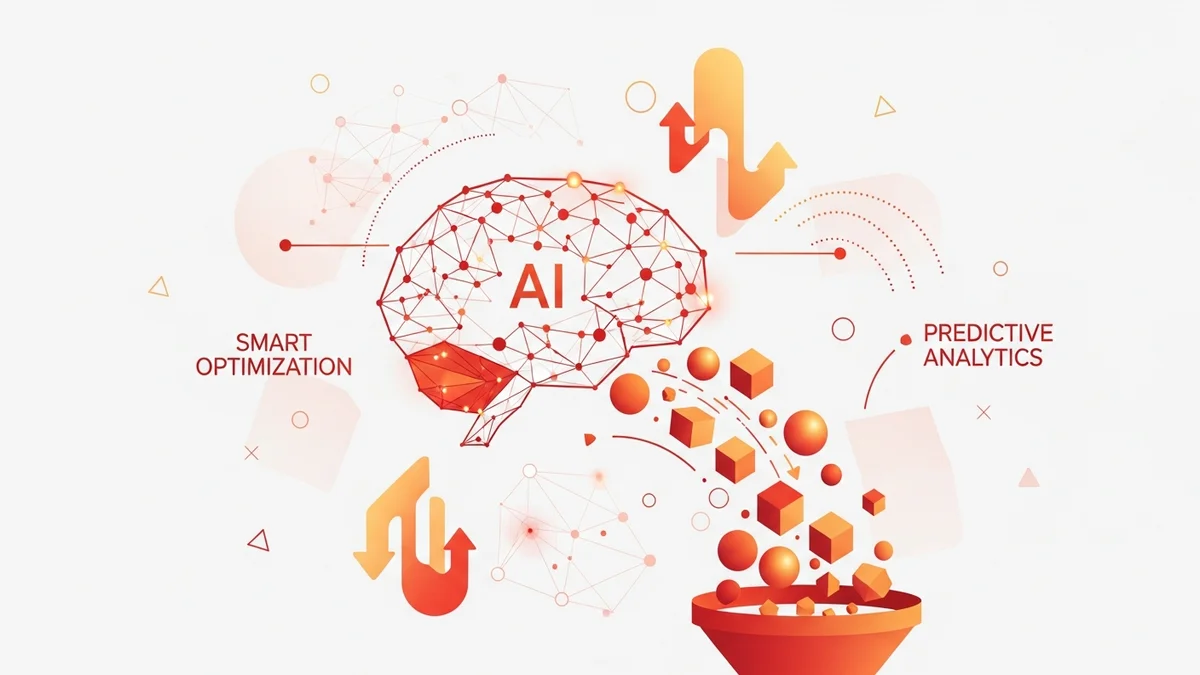
Traditional lead scoring was rule-based: if a lead opened three emails and visited the pricing page, score them high. AI-powered scoring is behavioral and probabilistic. It analyzes hundreds of data signals simultaneously — not just what a lead did, but when, how often, and in what sequence — then compares those patterns against historical conversion data to predict actual buying intent. The result is prioritization that's genuinely useful rather than mechanically applied.
Platforms like ActiveCampaign have built machine learning-driven lead scoring into their core feature set, letting small and mid-sized teams access the kind of predictive intelligence that used to require enterprise data science teams.
Automated Personalization at Scale
Personalization has always been the gap between what marketers want to do and what they can operationally execute. AI closes that gap. Using behavioral signals, CRM data, and interaction history, AI-powered funnel software can now serve individualized content, email sequences, and follow-up cadences to thousands of leads simultaneously — without a human manually configuring each workflow.
Outreach's research is instructive here: teams using AI-powered prospecting report up to a 35% improvement in engagement rates. That improvement comes directly from relevance — the right message hitting the right person at the right moment, executed by software that never sleeps or forgets a follow-up.
Autonomous Pipeline Management
The most significant shift in 2026 is AI agents that don't just assist — they act. These aren't chatbots waiting for a prompt. They proactively identify stalled deals, flag at-risk pipeline, execute research on new prospects, and trigger outreach sequences based on real-time behavioral signals. Outreach's own data shows 45% of high-performing sales teams have already adopted hybrid human-AI SDR models, where AI handles the front-end research and first-touch work while humans focus on relationship development and complex deal strategy.
The Numbers That Should Make You Act Now
Opinions are cheap. Here's what the data actually shows when AI is integrated into sales funnel workflows:
| Metric | Before AI | After AI | Source |
|---|---|---|---|
| Research time per prospect (LivePerson case study) | 20 minutes | 2 minutes | Outreach Prospecting 2025 |
| Weekly prospecting hours saved (teams using AI SDRs) | — | 4–7 hours per rep | Outreach Prospecting 2025 |
| Engagement rate improvement (AI-powered prospecting) | Baseline | +35% | Outreach platform data |
| Reduction in prospect research time | Baseline | Up to 90% | Outreach platform data |
| Productivity boost from AI sales tools | Baseline | Up to 30% | MarketsandMarkets, 2026 |
| Revenue increase from AI implementation | Baseline | Up to 25% | MarketsandMarkets, 2026 |
| C-suite leaders already using AI tools | — | 99% | MarketsandMarkets, 2026 |
| Companies planning to increase AI investment (next 3 years) | — | 92% | MarketsandMarkets, 2026 |
Newsletter
Get the latest SaaS reviews in your inbox
By subscribing, you agree to receive email updates. Unsubscribe any time. Privacy policy.
The LivePerson figure deserves special attention. Going from 20 minutes to 2 minutes per prospect isn't a marginal improvement — it's a 10x efficiency gain that fundamentally changes what's operationally possible for a sales team. A rep who previously researched 15 prospects a day can now research 150. That's not a productivity increase; it's a category shift in what small teams can accomplish without adding headcount.
And the macro picture reinforces this urgency: AI is projected to add $4.4 trillion in productivity growth from corporate use cases. Sales funnel automation is one of the most direct paths to capturing a slice of that value.
How Today's Leading Funnel Platforms Are Responding to the AI Moment
The honest assessment of the funnel-builder market in 2026 is that there's significant variation in how seriously different platforms have invested in AI — and that gap is widening. Here's how to think about the landscape:
Platforms Built for the AI-First Era
GoHighLevel has aggressively positioned itself as an AI-native platform for agencies and SMBs. Its AI workflow automations, conversation AI, and content generation features are integrated throughout the platform rather than bolted on as add-ons. For teams that need to automate follow-up sequences, appointment booking, and lead nurturing across multiple clients simultaneously, GoHighLevel's approach to AI represents a genuine operational advantage over tools that treat AI as a premium upsell.
Kartra takes a unified approach that makes AI more useful than it would be in a fragmented stack. When your funnel builder, email platform, membership site, and CRM all share the same data layer, the AI can make smarter decisions — because it's working with complete behavioral profiles rather than siloed data points. That integration advantage matters more than any individual AI feature.
Established Players Adapting to AI Demands
ClickFunnels remains one of the most widely used funnel platforms, and its AI-assisted copywriting and funnel-building features lower the barrier to creating high-converting pages. The platform's strength is its template library and community, and AI has accelerated the speed at which new users can get from zero to a functioning funnel. That matters enormously for entrepreneurs who don't have the time or budget for professional copywriters.
Unbounce has invested meaningfully in AI-powered conversion optimization. Its Smart Traffic feature — which uses machine learning to route visitors to the landing page variant most likely to convert based on their attributes — is a genuine AI application with measurable impact. Unbounce's Smart Copy AI also helps teams generate and iterate on landing page copy faster than traditional methods.
Instapage has similarly leaned into AI for personalization, with dynamic content capabilities that let teams serve different messaging to different audience segments from a single campaign. For B2B teams running account-based marketing, this kind of AI-assisted personalization at scale is increasingly non-negotiable.
The Hybrid Human-AI Model: What Top Performers Are Actually Doing
The most useful insight from the Outreach research isn't a specific metric — it's the operational model that top teams have converged on. The 45% of high-performing teams using hybrid human-AI SDR structures haven't replaced human judgment; they've reallocated it. AI handles the tasks that require speed, scale, and pattern recognition. Humans handle the tasks that require empathy, nuance, and relationship-building.
Applied to sales funnel management, this looks like: AI handles lead scoring, initial email personalization, follow-up sequencing, and behavioral trigger-based outreach. Humans handle demo calls, complex objection handling, pricing negotiations, and high-value relationship development. The result isn't a smaller team — it's the same team closing significantly more deals.
For teams evaluating funnel software through this lens, the right question isn't "does this platform have AI?" It's "does this platform's AI take work off my team's plate in the specific stages where we lose time?" A content AI feature that generates landing page copy is useful. An AI that automatically segments your email list based on engagement patterns and adjusts send times accordingly is genuinely time-saving. Know the difference before you buy.
The Personalization Trap
One area where teams consistently over-invest is surface-level personalization — adding a first name to an email subject line and calling it "AI personalization." Real AI-driven personalization, the kind that produces the 35% engagement rate improvements in the Outreach data, is behavioral. It means sending different messages based on what a prospect has actually done: which pages they've visited, which emails they've opened, where they dropped off in your funnel, and how those patterns compare to historically converted customers.
Platforms like ActiveCampaign and Kartra have built this kind of behavioral intelligence into their automation engines. If you're currently using a platform that treats personalization as a mail-merge token, you're leaving engagement rate improvements on the table.
How to Evaluate AI Features When Choosing Funnel Software
The market is flooded with platforms claiming AI capabilities, which makes evaluation harder than it should be. Here's a framework for separating genuine AI investment from marketing language:
Ask What the AI Actually Automates
Push past the feature list and ask: what manual task does this AI feature replace? If the answer is "it helps you write copy faster," that's useful but limited. If the answer is "it automatically identifies which leads are most likely to convert this week based on behavioral signals and adjusts your outreach priority accordingly," that's transformative. The MarketsandMarkets research is clear that the highest-value AI applications are those that handle tasks that currently consume time without generating revenue — research, data entry, segmentation, and routine follow-up.
Prioritize Integration Depth Over Feature Count
An AI feature is only as good as the data it can access. A funnel builder with AI-powered lead scoring that can't access your email engagement data, CRM history, and ad performance will produce worse predictions than a less sophisticated AI with access to your full customer data graph. This is why all-in-one platforms often outperform point solutions in AI applications, even when the individual AI features look similar on paper.
Look for Continuous Learning, Not Static Rules
The distinction between rules-based automation and genuine machine learning matters enormously over time. Rules-based systems do exactly what you configure them to do, indefinitely, regardless of whether that configuration still matches reality. Machine learning systems improve as they accumulate more data. If your funnel software's "AI" is a sophisticated if-then engine, you'll need to manually update it as your market changes. If it's genuinely learning from outcomes, it gets smarter as you use it.
For teams just entering this evaluation process, starting with platforms that have strong AI roadmaps and existing behavioral automation capabilities — rather than retrofitting AI onto legacy tools — will pay dividends as the technology continues to mature. Whether that's GoHighLevel for agency-scale operations, ClickFunnels for straightforward funnel construction, or Kartra for unified platform coverage, the priority should be choosing a platform that treats AI as infrastructure, not an afterthought.
The sales landscape of 2026 has made one thing undeniable: teams that have embedded AI into their funnel operations aren't just slightly ahead. They're operating in a different league — closing faster, qualifying better, and scaling without proportional headcount increases. The $4.4 trillion productivity opportunity is real. The only question is whether your current stack is positioned to capture it.