
Stripe Checkout Pricing Guide 2026: Every Fee, Plan, and Hidden Cost Explained
Stripe Checkout is the hosted, conversion-optimized payment page that sits on top of Stripe's core payment infrastructure. Its pricing model looks refreshingly simple at first glance — no monthly subscription, no setup fee — but the real cost of using Stripe can climb well above 6% per transaction once you layer in international fees, currency conversion, add-on services, and dispute costs. This guide breaks down every number so you know exactly what you'll pay.
Stripe Pricing Tiers at a Glance
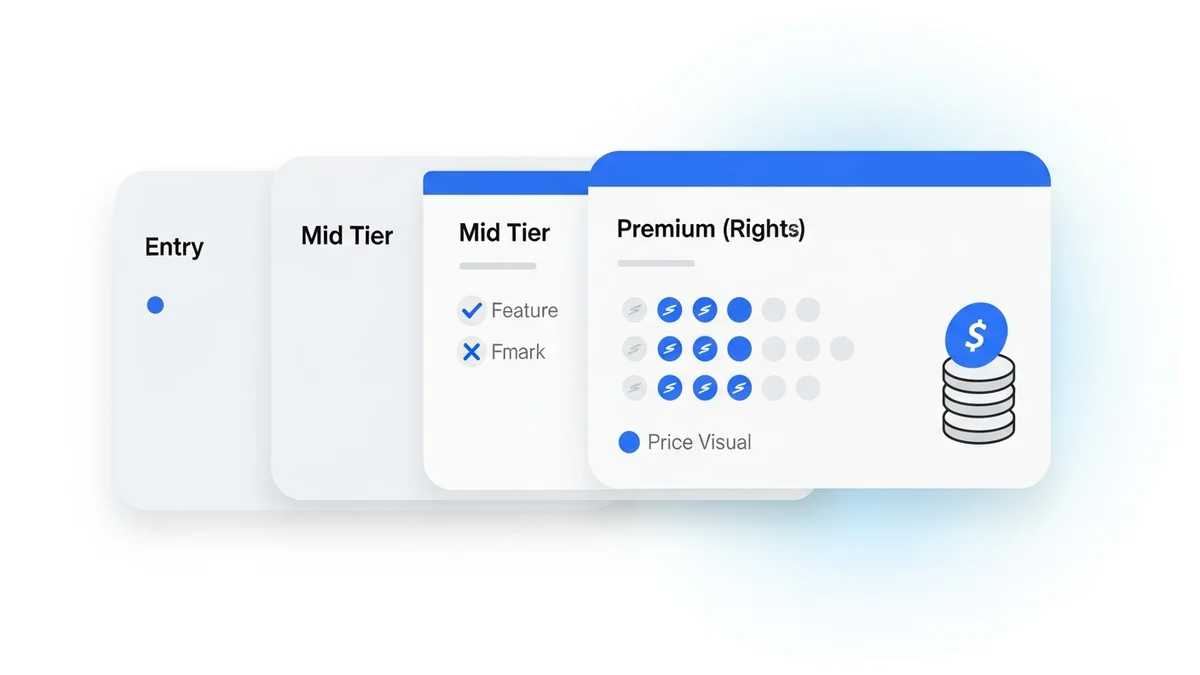
Stripe does not sell Checkout as a standalone product with tiered monthly plans. Instead, it operates on a pay-as-you-go transaction model with three distinct pricing approaches based on company stage and processing volume:
| Tier | Rate | Monthly Fee | Best For |
|---|---|---|---|
| Standard | 2.9% + $0.30 per transaction | $0 | All businesses, no minimums required |
| Startups Program | Fee credits / waivers | $0 | Venture-backed startups (12-month benefit window) |
| Enterprise / Custom | Custom negotiated (typically below 2.5%) | Custom (typically $500+/month in platform fees) | Businesses processing $5M+ annually |
Because there is no monthly subscription, the cost of Stripe Checkout scales directly with your revenue. For a business processing $10,000/month with an average order value of $100, you'd process 100 transactions and pay approximately $320 in fees (2.9% × $10,000 + $0.30 × 100) before any add-ons.
Standard Plan: Full Feature Breakdown
The Standard tier is available to every business with no minimum volume requirements. Here is exactly what is included:
Core Payment Processing
- Online card transactions: 2.9% + $0.30 per successful charge (Visa, Mastercard, Amex, Discover)
- Manually entered / card-not-present: 3.4% + $0.30 (e.g., entering card details directly in the Stripe Dashboard)
- In-person / card-present: 2.7% + $0.05 (requires Stripe Terminal hardware purchase)
- ACH direct debit: 0.8% per transaction, capped at $5.00
- Apple Pay / Google Pay: Standard card rates apply (2.9% + $0.30) — no surcharge
What's Included at No Extra Cost
- Access to 135+ currencies and 100+ payment methods
- Stripe Radar basic fraud detection (machine learning, no monthly fee)
- Dashboard, webhooks, and full API access
- PCI DSS Level 1 compliance (no compliance fee)
- Hosted Checkout page with pre-built UI
- Automatic tax calculation (available, billed separately at 0.5% per transaction)
- No setup fees, no monthly minimums, no cancellation fees
Startups Program
Venture-backed startups can apply for the Stripe Startups Program, which provides fee credits or complete fee waivers for up to 12 months. Eligibility requires proof of institutional funding. This is not publicly self-serve — founders apply through Stripe's partner network or directly through startup accelerator deals.
Enterprise Pricing
Businesses processing over $5 million annually can negotiate custom rates directly with Stripe's enterprise sales team. Custom pricing typically includes volume discounts on the percentage fee, reduced or waived dispute fees, dedicated account management, and SLA guarantees. Enterprise arrangements typically involve platform fees starting at $500+/month alongside the negotiated per-transaction rate.
Hidden Costs: The Fees That Push Your Rate Above 6%
This is where Stripe's pricing gets genuinely complex. The 2.9% + $0.30 headline rate is real — but it only applies to a domestic card transaction with no add-ons. Every variation adds cost:
International and Currency Fees
- International card fee: +1.5% on top of the standard rate when the card is issued outside your country
- Currency conversion (US accounts): +1.0% when Stripe converts a foreign currency to your settlement currency
- Currency conversion (non-US accounts): +2.0%
Practical example: A UK customer pays $200 with a UK-issued Mastercard on a US Stripe account. The effective rate is 2.9% + 1.5% + 1.0% = 5.4%, plus $0.30 — a total fee of $11.10 on a $200 transaction.
Newsletter
Get the latest SaaS reviews in your inbox
By subscribing, you agree to receive email updates. Unsubscribe any time. Privacy policy.
Dispute and Chargeback Fees
- Chargeback fee: $15 per dispute, non-refundable even if you win
- Stripe Radar for Fraud Teams (advanced ML rules): $0.02 per screened transaction
Add-On Service Fees
- Stripe Billing (recurring subscriptions): 0.7% on subscription volume processed
- Stripe Invoicing Starter: 0.4% per paid invoice
- Stripe Invoicing Plus: 0.5% per paid invoice, capped at $2.00
- Instant Payouts (US): 1.5% of the payout amount
- Instant Payouts (Canada, EU, UK, Singapore, Malaysia, Norway): 1.0% of the payout amount
- Stripe Tax: 0.5% per transaction where tax is calculated
A SaaS business using Stripe Checkout + Stripe Billing for subscriptions with an international customer base can realistically hit an effective rate of 5–6.5% per transaction once all fees stack.
Stripe Checkout vs. Competitors: Pricing Comparison
To put Stripe's pricing in context, here is how it compares to other major payment processors relevant to funnel builders and online businesses. If you're using platforms like SamCart or Kartra, understanding the underlying payment processor cost matters — these platforms add their own subscription fees on top.
| Processor | Standard Online Rate | Monthly Fee | International Card Surcharge | Dispute Fee |
|---|---|---|---|---|
| Stripe Checkout | 2.9% + $0.30 | $0 | +1.5% | $15 (non-refundable) |
| PayPal (Standard) | 3.49% + $0.49 | $0 | +1.50% | $20 (refunded if you win) |
| Square Online | 2.9% + $0.30 | $0 | +1.0% (Visa/MC international) | No separate fee (loss of transaction) |
| Braintree (PayPal) | 2.59% + $0.49 | $0 (first $50K free) | +1.0% | $15 (non-refundable) |
Stripe's headline rate matches Square but beats PayPal's standard rate. Braintree offers a slightly lower percentage but a higher per-transaction fixed fee, which disadvantages lower-value transactions. For businesses selling high-ticket items through funnels built on tools like ClickFunnels, the fixed $0.30 component matters less, making Stripe's rate more competitive at higher AOVs.
Who Each Tier Is Best For
Standard Tier — Best for Early-Stage and Mid-Market Businesses
The Standard pay-as-you-go plan is ideal for any business not yet hitting $5M annual processing volume. Specific use cases include:
- E-commerce stores with domestic customers and average order values above $30 (where the $0.30 fixed fee is less than 1% of AOV)
- SaaS companies billing $50–$500/month per subscriber who need Stripe Billing's subscription logic — though adding Billing adds 0.7%, making the effective rate 3.6% + $0.30
- Digital course creators and coaches selling via funnel platforms like GoHighLevel or ActiveCampaign who need reliable Checkout with minimal engineering overhead
- Agencies building client funnels using Stripe Connect to route payments to sub-accounts
Startups Program — Best for Funded Early-Stage Startups
If you've raised a seed or Series A round through a recognized VC or accelerator, applying for the Startups Program is a no-brainer. Fee waivers or credits over 12 months can represent tens of thousands of dollars in savings during your high-growth phase. The catch: you must apply and be approved, and benefits expire after 12 months.
Enterprise — Best for High-Volume Recurring Revenue Businesses
Once you're processing $5M+/year, the math shifts dramatically. Negotiating even 0.3% off the standard rate saves $15,000 per $5M in volume. Enterprise is the right move for:
- Established SaaS platforms with thousands of paying subscribers
- Marketplace businesses routing payments to multiple sellers
- Any business with significant international transaction volume where negotiating the FX markup matters
Money-Saving Tips for Stripe Checkout Users
Given how fees stack in Stripe's model, there are several concrete strategies to reduce your effective rate:
1. Reduce Manually Keyed Transactions
Manually entered card transactions cost 3.4% + $0.30 versus 2.9% + $0.30 for standard online transactions — a 0.5% premium. If your team is manually entering cards into the Dashboard for phone orders, even occasional use adds up. Route these through a proper Checkout link instead.
2. Minimize International Processing with Multi-Currency Accounts
The 1.5% international surcharge plus 1–2% currency conversion fee is the biggest silent cost for businesses with global customers. If you process significant EUR, GBP, or CAD volume, consider opening local Stripe accounts in those regions or using Stripe's multi-currency settlement to hold funds in local currencies without immediate conversion.
3. Avoid Instant Payouts Unless Necessary
Instant Payouts cost 1.5% in the US. Standard payouts (1–2 business days) are free. Unless cash flow is genuinely critical, scheduling standard payouts saves real money — 1.5% on $100,000/month in payouts is $1,500/month purely in payout fees.
4. Use Radar's Free Tier Aggressively Before Upgrading
Stripe Radar's basic ML fraud detection is included free. The paid Radar for Fraud Teams ($0.02/transaction) is only worth it once you have a high enough fraud rate that the $0.02/screened-transaction cost is less than your current chargeback losses. At the $15/chargeback dispute fee, you need to prevent at least one chargeback for every 750 transactions to break even on the Radar upgrade.
5. Negotiate Volume Discounts Before $5M
Stripe's official Enterprise threshold is $5M, but many businesses report success negotiating modest rate reductions at $1–2M annual volume. Contact Stripe's sales team directly rather than waiting until you hit the official threshold.
6. Evaluate Whether Stripe Billing Is Cost-Effective for Your Model
At 0.7% on subscription volume, Stripe Billing adds meaningful cost. For a business with $500,000/month in subscription revenue, that's $3,500/month just for the billing layer. If your subscription logic is simple (fixed monthly plans, no usage-based billing), platforms like SamCart handle recurring billing within their flat monthly fee and may be more economical depending on your volume.
Is Stripe Checkout Worth the Cost?
For most businesses, yes — with caveats. Stripe's zero monthly fee, extensive API surface, and PCI DSS Level 1 compliance make it the default choice for developer-built products. The conversion-optimized Checkout page (which supports Link, Apple Pay, Google Pay, and 100+ payment methods out of the box) compares favorably with the checkout modules inside funnel platforms like Leadpages or Systeme.io.
The cost becomes a genuine concern when international transactions are a significant share of revenue, when subscription volume is high enough that the 0.7% Billing fee becomes material, or when chargebacks are frequent (at $15 non-refundable per dispute, even a 1% chargeback rate adds 0.15% to your effective processing rate). In those cases, running the numbers against a negotiated Enterprise rate — or evaluating dedicated checkout platforms that bundle payment processing differently — is worth the analysis.
Bottom line: Stripe Checkout's 2.9% + $0.30 standard rate is competitive and the all-in infrastructure value is strong for domestic, low-chargeback businesses. International sellers and high-subscription-volume SaaS companies should model their actual all-in rate carefully before assuming the headline number reflects their true cost.