Kajabi Pricing in 2026: Every Plan, Every Fee, and Whether It's Worth It
Kajabi has built a reputation as the premium all-in-one platform for course creators, coaches, and digital product sellers. With plans starting at $89 per month and climbing to $399 per month, it's one of the pricier options in the market — but the feature depth can justify the cost if you pick the right plan. This guide breaks down every plan in precise detail, flags the costs most people miss, and compares Kajabi head-to-head against key alternatives like Kartra and ClickFunnels.
Kajabi Pricing Plans at a Glance
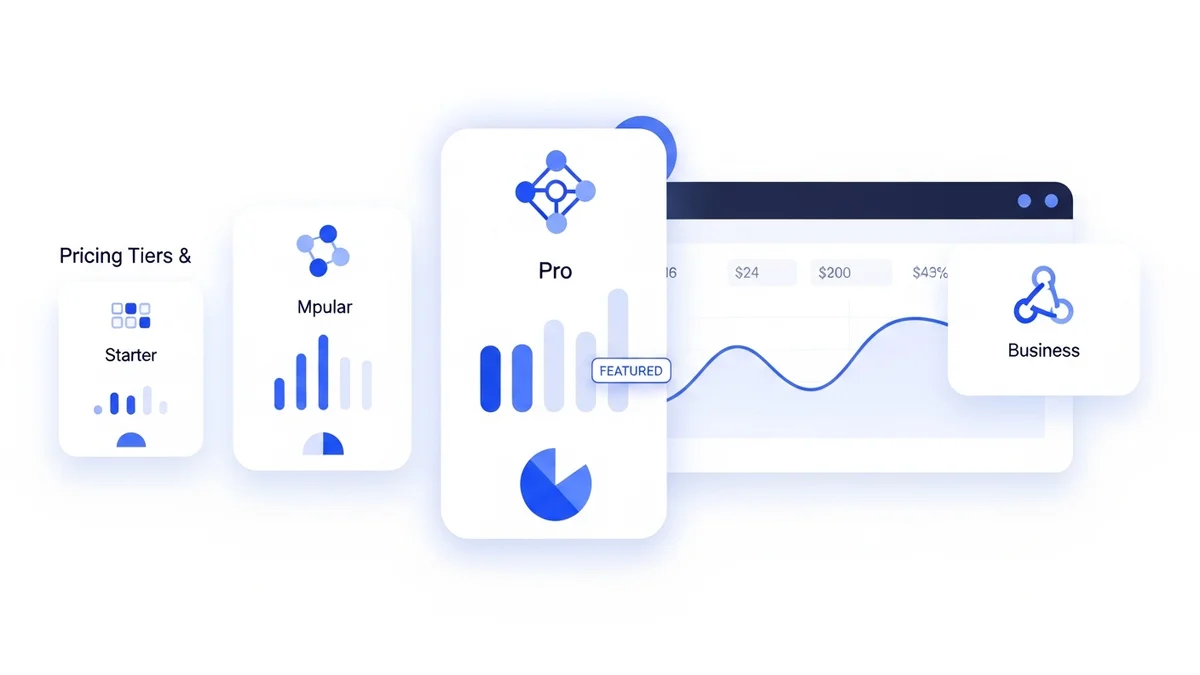
Kajabi offers four paid plans with no free tier. You can pay monthly or save 20% by committing to annual billing. There are no transaction fees on any plan.
| Plan | Monthly Price | Annual Price (per month) | Annual Total | Transaction Fee |
|---|---|---|---|---|
| Kickstarter | $89/month | $71/month | $852/year | 0% |
| Basic | $149/month | $119/month | $1,428/year | 0% |
| Growth | $199/month | $159/month | $1,908/year | 0% |
| Pro | $399/month | $319/month | $3,828/year | 0% |
A 14-day free trial is available. No credit card is required to explore the platform before committing.
What Each Kajabi Plan Includes
Kickstarter — $89/month ($71/month annually)
The Kickstarter plan is Kajabi's entry-level offering. It's designed for solo creators who have one product to sell and want an all-in-one setup without managing multiple subscriptions.
- 1 Product (online course, membership, coaching program, or digital download)
- 1 Community
- 1 Pipeline (sales funnel sequence)
- 1 Website
- 250 Contacts
- 7,500 Marketing Emails per month
- Unlimited Landing Pages
- 0% transaction fees
The 250-contact ceiling is the biggest constraint on this plan. If you run paid ads or actively build your list, you can hit that limit in weeks. At that point, you either upgrade your plan or stop marketing — neither is ideal.
Basic — $149/month ($119/month annually)
The Basic plan is where most solo creators actually operate. It significantly expands product and contact limits compared to Kickstarter, making it viable for anyone with a growing audience.
- 3 Products
- 3 Pipelines
- 1 Website
- 1,000 Contacts
- 10,000 Marketing Emails per month
- Unlimited Landing Pages
- 1 Admin User
- 0% transaction fees
The jump from $89 to $149 per month gets you three times the products, four times the contacts, and a meaningful increase in monthly email sends. If you have more than one course in progress or expect to grow past 250 contacts quickly, Basic is the more practical starting point.
Growth — $199/month ($159/month annually)
The Growth plan is a significant upgrade in operational capability. This is where Kajabi transitions from a creator tool into a scalable business platform, adding automation, affiliate management, and team access.
- 15 Products
- 15 Pipelines
- 1 Website
- 10,000 Contacts
- Unlimited Marketing Emails
- Unlimited Landing Pages
- Advanced Automations
- Affiliate Program
- 10 Admin Users
- 0% transaction fees
The affiliate program is a significant revenue lever that lower plans don't include. If you rely on partners or influencers to promote your products, Growth is the minimum viable plan. The jump to unlimited marketing emails also removes the cap that constrains list-based businesses on lower tiers.
Pro — $399/month ($319/month annually)
The Pro plan is built for established businesses with multiple brands, high traffic, or team structures that require granular permissions and white-label capabilities.
- 100 Products
- 100 Pipelines
- 3 Websites
- 100,000 Contacts
- Unlimited Marketing Emails
- Unlimited Landing Pages
- Advanced Automations
- Affiliate Program
- Custom Code Editor
- 25 Admin Users
- 0% transaction fees
The three-website allowance is a distinguishing feature — it lets you run separate brands or verticals under one Kajabi account. Custom code access gives developers the flexibility to build beyond Kajabi's default templates. At $3,828 per year on the annual plan, this tier is only cost-effective if you're generating substantial revenue from your digital products.
Newsletter
Get the latest SaaS reviews in your inbox
By subscribing, you agree to receive email updates. Unsubscribe any time. Privacy policy.
Hidden Costs and Fees to Know Before You Buy
Kajabi is more transparent than many competitors, but there are still costs that don't appear in the headline pricing.
- Contact overage: Kajabi does not automatically bill you for exceeding contact limits. Instead, new subscribers beyond your plan limit will be blocked or require a plan upgrade. This can interrupt list growth at the worst possible time — mid-launch.
- Email overage on lower plans: On the Kickstarter and Basic plans, monthly email sends are capped. If you hit the cap during a promotion, you cannot send until the next billing cycle resets — or you upgrade.
- Custom domain: Kajabi provides a free subdomain (yoursite.mykajabi.com), but a custom domain requires purchasing one separately through a registrar like Namecheap or Google Domains, typically $10–$15/year.
- Kajabi AI credits: Kajabi has introduced AI-powered content creation tools. These operate on a credit system on certain plans. Heavier usage may require purchasing additional credits.
- Payment processing fees: Kajabi charges 0% platform transaction fees on all plans, but Stripe and PayPal — the two supported payment processors — charge their standard fees (Stripe is typically 2.9% + $0.30 per transaction). This is not a Kajabi fee, but it is a real cost of doing business on the platform.
- No free plan: Unlike Systeme.io, which offers a functional free tier, Kajabi requires a paid subscription from day one after the 14-day trial expires.
Kajabi vs. Competitors: Pricing Comparison
Kajabi sits at the premium end of the market. Here's how its pricing compares to four direct alternatives, all of which compete in the all-in-one or funnel-builder category.
| Platform | Entry Plan | Mid-Tier Plan | Top Plan | Free Plan | Transaction Fees |
|---|---|---|---|---|---|
| Kajabi | $89/month | $199/month | $399/month | No (14-day trial) | 0% |
| Kartra | $99/month | $189/month | $429/month | No (14-day trial $1) | 0% |
| ClickFunnels | $97/month | $297/month | $2,497/month | No (14-day trial) | 0% |
| Systeme.io | Free | $27/month | $97/month | Yes (permanent) | 0% |
| GoHighLevel | $97/month | $297/month | $497/month | No (14-day trial) | 0% |
Kajabi's pricing is competitive with Kartra at the entry level, but Systeme.io undercuts both dramatically — offering a free plan with up to 2,000 contacts and 3 sales funnels. The trade-off is feature depth and polish: Kajabi's course delivery experience and native community features are significantly more refined than what Systeme.io provides at the free tier.
GoHighLevel is worth comparing if you're an agency or service provider rather than a course creator — it includes CRM, pipeline management, and white-label options that Kajabi doesn't offer at comparable price points.
Who Each Kajabi Plan Is Best For
Kickstarter ($89/month) — Best for: First-time creators with one product
If you have a single course, coaching program, or membership to sell and fewer than 250 contacts on your list, the Kickstarter plan covers the basics. A fitness coach launching their first online program, a consultant offering one group coaching cohort, or a musician selling a single course on music theory would all be good fits. The moment you want to launch a second product or run a serious email marketing campaign to a list larger than 250 people, this plan becomes a bottleneck.
Basic ($149/month) — Best for: Solo creators building a product suite
The Basic plan is the practical starting point for most creators. If you're running a podcast and selling a course on the side, or a coach who wants to offer both a group program and a self-paced course simultaneously, Basic gives you room to grow. The 1,000-contact limit and 10,000 monthly email cap are workable for early-stage businesses that aren't running large paid acquisition campaigns yet.
Growth ($199/month) — Best for: Established creators scaling with affiliates and automation
The Growth plan is the threshold for running Kajabi as a real business. The affiliate program alone can generate enough incremental revenue to cover the cost difference from Basic. Creators who are running evergreen funnel sequences, managing a team of virtual assistants or contractors, or actively building a partner network belong on this plan. The unlimited email sends also remove a meaningful constraint for anyone running regular email campaigns to a growing list.
Pro ($399/month) — Best for: Multi-brand businesses and high-volume operators
The Pro plan makes financial sense when you're operating at a scale where the cost of stitching together separate tools would exceed $399 per month. Running three distinct brands under one account, managing 100,000 contacts, and deploying 25 team members with different access levels — these are Pro-tier use cases. A digital media company with multiple course brands, or a large coaching organization with several verticals, would find Pro to be cost-efficient relative to managing separate platforms.
Money-Saving Tips for Kajabi
- Always pay annually if you're committed: The 20% discount on annual billing saves between $204 and $960 per year depending on the plan. On the Pro plan, that's $960 back in your pocket — enough to cover a significant portion of paid advertising or contractor costs.
- Start on Kickstarter and validate before upgrading: If you haven't sold your first product yet, start at $89/month, make your first sales, then upgrade. Don't pay for Growth plan features before you've validated your offer.
- Watch the contact limit before launching: If you're planning a major launch that will add hundreds of contacts rapidly, upgrade your plan before the launch — not during. Being forced to upgrade mid-launch disrupts momentum and often costs more in lost conversions than the upgrade itself.
- Use Kajabi's native email instead of a third-party ESP: Kajabi includes email marketing on all plans. If you're currently paying separately for an email tool like ActiveCampaign, consolidating onto Kajabi can offset a significant portion of the platform cost.
- Take the 14-day trial seriously: Build out your course, test your funnel, and run a mock checkout before committing to a plan. Kajabi's trial is fully functional, and it's the only risk-free window to test whether the platform suits your workflow.
- Use the affiliate program on Growth to cover plan costs: A single affiliate partner driving consistent sales can generate enough commission revenue to make the Growth plan self-funding. Treat the affiliate program as a built-in cost-recovery mechanism, not just an optional marketing channel.
Is Kajabi Worth the Price?
Kajabi's value proposition rests on consolidation. If you're currently paying separately for a course hosting platform, an email marketing tool, a sales funnel builder, a website builder, and a community platform, Kajabi can replace all of them under one subscription. The math often works in Kajabi's favor once you're operating at mid-scale.
For pure funnel-building, platforms like ClickFunnels or Kartra offer comparable funnel functionality at similar price points, but without the course delivery infrastructure. If your primary business model is digital products and you want one platform to handle everything from content delivery to email marketing to sales funnels, Kajabi is one of the most complete options available — and Kajabi users have collectively generated over $6 billion in revenue through the platform, which speaks to its commercial effectiveness.
The bottom line: Kajabi is expensive for hobbyists and the contact limits on lower plans are a real constraint for growth-focused operators. But for creators running a digital product business with genuine revenue ambitions, the all-in-one nature and 0% transaction fees make the monthly cost defensible.