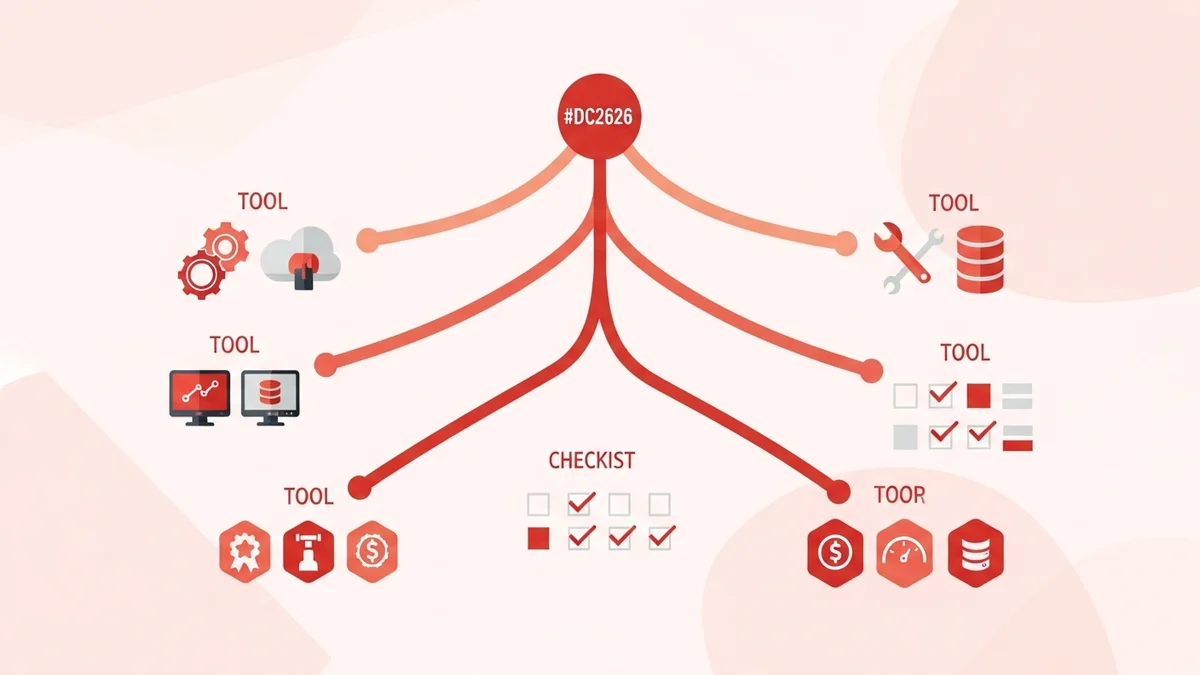

Why Choosing the Right Funnel Builder in 2026 Actually Matters
Most businesses don't have a traffic problem. They have a conversion problem. You can pour money into ads, crank out content, and still watch leads evaporate because the moment someone lands on your page, your funnel isn't doing its job. The platform you build that funnel on is either helping you close — or quietly bleeding revenue every single day.
The good news: the funnel builder market has matured significantly heading into 2026. AI-assisted page generation, built-in CRM, behavioral automation, and omnichannel follow-up are no longer premium add-ons — they're baseline expectations. The bad news: there are now more options than ever, and the wrong choice costs you far more than just a monthly subscription fee.
This guide cuts through the noise. We'll walk you through what actually separates high-converting funnel platforms from glorified page builders, how to match a tool to your specific business model, and which platforms are worth your time in 2026.
What a Sales Funnel Builder Actually Does (and What It Should Do)
A sales funnel is the mapped journey your buyer takes — from first becoming aware of your brand all the way through purchase and post-sale loyalty. The concept dates back to 1898, but what's changed in 2026 is the level of automation, personalization, and insight available at every stage of that journey.
A basic funnel builder gives you drag-and-drop landing pages and a thank-you page. That's the floor, not the ceiling. A serious funnel builder in 2026 should give you:
- Visual page construction — drag-and-drop editors with mobile-first templates
- Email and SMS automation — behavior-based sequences, not just blast campaigns
- Payment and checkout integration — order bumps, upsells, and secure processing built in
- CRM or CRM integration — so leads don't fall into a black hole after opt-in
- Analytics and split testing — so you can optimize based on data, not guesswork
- AI-powered optimization — the platforms pulling ahead in 2026 are using AI to generate pages, suggest copy, and predict drop-off points
If your current platform is missing two or more of these, you're likely stitching together multiple tools — and paying a coordination tax in both time and money every single month.
The 5 Key Factors to Evaluate Before You Commit
1. Your Primary Business Model
No single funnel builder is best for everyone. A solopreneur selling a single online course has fundamentally different needs than an agency managing twenty client funnels, or a SaaS company running automated demo request flows. Before you compare features, define what success looks like for your funnel — lead capture, course sales, product upsells, webinar registrations, or high-ticket consultations.
2. Automation Depth
There's a wide gap between "has email sequences" and "true marketing automation." The former sends emails on a timer. The latter triggers actions based on behavior — page visits, link clicks, purchase history, form completions. Automating and personalizing journeys rather than using one-size-fits-all campaigns measurably improves lead quality and engagement. Look for segmented email sequences, behavior-based triggers, and dynamic content capabilities before you commit.
3. Integration With Your Existing Stack
The most powerful funnel builder is still a liability if it doesn't talk to your CRM, payment processor, or ad platforms. Verify native integrations first — then check what's available via Zapier or API as a fallback. The fewer manual handoffs between tools, the tighter your funnel and the cleaner your data.
4. Scalability and Team Support
A tool that works beautifully at 500 contacts may buckle at 50,000. Check contact limits, user seat restrictions, and how pricing scales with volume before you fall in love with a platform. Some tools charge per funnel, others per contact, others per feature tier. Run the math at 3x your current volume before signing up.
5. Total Cost of Ownership
The sticker price is almost never the real price. Factor in what you'll need to add — third-party email tools, CRM subscriptions, A/B testing add-ons, or developer help to connect everything. A platform priced at $29/month that requires four additional tools often costs more than an all-in-one at $97/month that includes everything.
Newsletter
Get the latest SaaS reviews in your inbox
By subscribing, you agree to receive email updates. Unsubscribe any time. Privacy policy.
Top Funnel Builders Compared: Features and Pricing
Here's how the leading platforms stack up on the dimensions that actually drive conversion results. These are the tools we recommend most frequently across different business types on this site.
| Platform | Starting Price | All-in-One | AI Features | Best For |
|---|---|---|---|---|
| GoHighLevel | $97/month | Yes — CRM, email, SMS, voice, funnels | AI page generation, AI automation | Agencies, SMBs, all-in-one operations |
| ClickFunnels | $97/month | Partial — CRM added in v2, still page-focused | Limited | Course creators, webinar funnels |
| Kartra | $99/month | Yes — pages, email, memberships, video | Limited | Multiple courses, coaching, cross-selling |
| Systeme.io | Free (paid from $27/month) | Yes — funnels, email, courses, memberships | Basic | Bootstrappers, solopreneurs on a budget |
| Leadpages | $37/month | No — landing pages and lead capture focused | AI copy suggestions | Lead generation, simple opt-in funnels |
| Unbounce | $99/month | No — landing pages and Smart Traffic | Smart Traffic AI routing | PPC advertisers, conversion rate testing |
| Instapage | $199/month | No — post-click optimization platform | AdMap, personalization engine | Enterprise PPC teams, high ad spend |
| ActiveCampaign | $15/month | Partial — email automation + basic pages | Predictive sending, AI content | Email-first automation, B2B lead nurture |
Which Platform Should You Actually Choose?
If You're an Agency or Manage Multiple Clients
GoHighLevel is the clear front-runner here and it's not particularly close. At $97/month you get unlimited funnels, unlimited contacts, email, SMS, voice follow-up, full CRM, and an AI suite that generates funnel pages automatically. No other platform in this price tier gives you this surface area. The white-label capability means you can resell it to clients under your own brand. For agencies, this is a revenue model, not just a tool.
If You Sell Courses or Digital Products
ClickFunnels built its reputation on exactly this use case — and it still delivers strong results for selling single courses, webinar flows, and order bump sequences. The updated v2 platform adds CRM functionality, though it still lags behind GoHighLevel and Kartra on native automation depth. If your model involves multiple courses, coaching programs, or complex cross-sell sequences, Kartra's approach gives you more structural flexibility for managing that catalog.
If You're Starting Out With a Tight Budget
Systeme.io is the honest answer. It's genuinely free to get started with limits that are generous enough to validate your funnel before you've made a single dollar. You get funnels, email marketing, course hosting, and affiliate management on the free plan. There are real constraints — you'll hit them as you scale — but as a starting point, no platform comes close to this value.
If You're Running Paid Ad Campaigns at Scale
For high-volume PPC operations, the calculus shifts toward page speed and personalization. Unbounce's Smart Traffic feature uses AI to route visitors to the highest-converting variant automatically — which compounds optimization results over time. Instapage goes further with its AdMap feature, letting you match landing page experiences to specific ad groups at scale. At $199/month it's priced for teams with real ad budgets, but the conversion lift on large campaigns justifies the investment.
The Hidden Costs of Free and Cheap Funnel Software
Every free tool has a business model, and that business model is usually you — your data, your branding, or your eventual upgrade. The real costs of under-priced funnel software rarely show up on the pricing page:
- Forced branding: Free plans from most platforms display their logo on your pages. That erodes trust, especially in higher-ticket markets.
- Contact and funnel limits: Hitting a cap mid-campaign is one of the most expensive problems in digital marketing. You either upgrade under pressure or lose leads.
- Weak support: When your checkout breaks on a launch day and support SLA is 72 hours, free becomes very expensive very quickly.
- Poor scalability: A platform built for solopreneurs isn't built for a 10,000-person webinar or a multi-step B2B sequence with 50 conditional branches.
- Compliance gaps: GDPR, CCPA, and data handling requirements matter. Cheap platforms frequently cut corners here, exposing you to liability.
The right question isn't "what's the cheapest funnel builder?" It's "what does this platform cost me at three times my current volume, and what does a bad launch cost me if support isn't there?" Run that math and the cheap option often disappears.
Making the Final Call: A Decision Framework
Rather than picking a platform based on which review article you read last, use this framework:
- Define your primary funnel goal — lead capture, course sales, product upsells, or full CRM pipeline
- List your non-negotiable integrations — payment processors, CRM, ad platforms, membership tools
- Map your 12-month growth trajectory — how many contacts, funnels, and team members will you need?
- Calculate total cost of ownership — include any add-ons you'll need to make the platform functional
- Run a live test — most platforms offer trials; build one real funnel before committing
The platforms that consistently perform across all five of these filters are GoHighLevel for all-in-one operators, Kartra for digital product businesses with complex catalog structures, and Systeme.io for early-stage builders who need to move fast without burning cash.
What doesn't work in 2026 is building your funnel on a tool that excels at one thing and forces you to duct-tape the rest together. High-converting funnels in 2026 depend on speed, personalization, and automation working together seamlessly — and that only happens when your platform is built for all three from the ground up.
Choose the platform that fits your business model today and can scale with it tomorrow. Then build, test, and optimize relentlessly. The funnel builder is the foundation — everything else is how well you use it.