
CartFlows Review 2025: The Best WooCommerce Funnel Builder?
If you're running a WooCommerce store and tired of watching customers abandon the default checkout page, CartFlows promises to fix that. Built by Brainstorm Force — the same team behind the wildly popular Astra theme — CartFlows has grown to 200,000+ active installs since its 2018 launch and is now one of the most-used funnel plugins in the WordPress ecosystem.
But is it the right tool for your store? This review breaks down exactly what CartFlows does, what it costs, where it falls short, and how it stacks up against alternatives like SamCart and ClickFunnels.
What Is CartFlows?
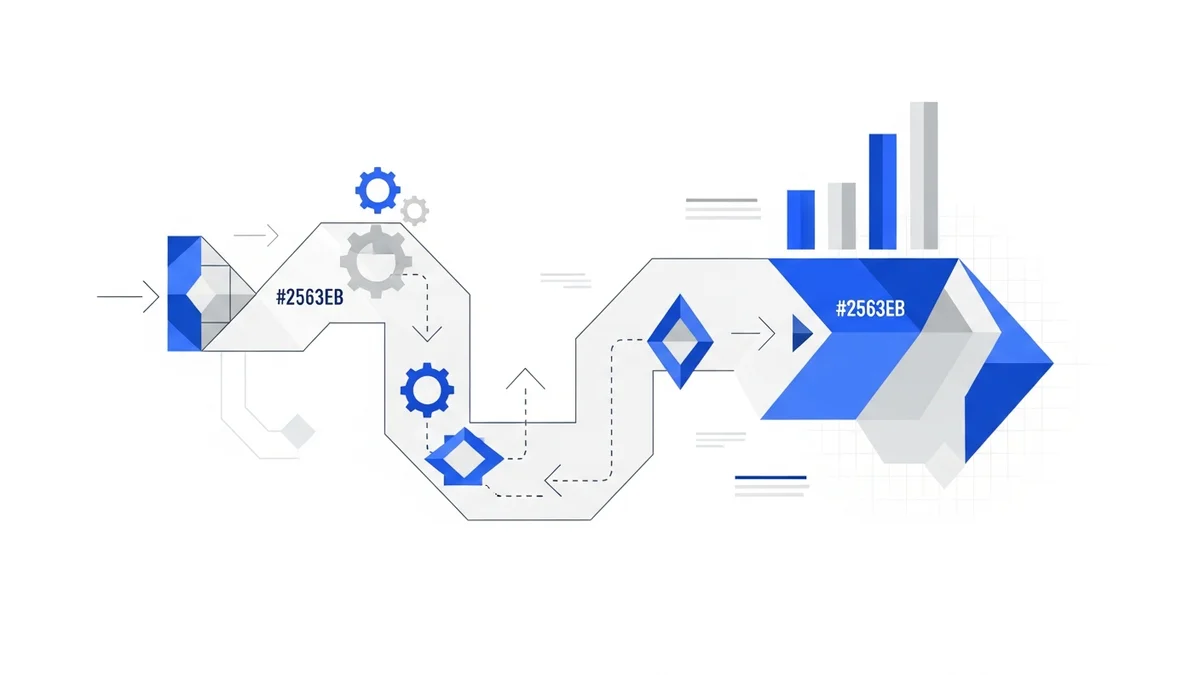
CartFlows is a sales funnel builder plugin for WordPress that extends WooCommerce with optimized checkout flows, one-click upsells, order bumps, and post-purchase sequences. Instead of sending customers through the generic WooCommerce checkout experience, CartFlows lets you define a guided path: landing page → custom checkout → upsell offer → thank-you page.
The core problem it solves is real: the default WooCommerce checkout is functional but not built for conversion. CartFlows replaces it with checkout layouts you actually control — one-page, multi-step, or two-column — and layers in revenue-boosting mechanics like order bumps and one-click upsells without requiring a separate SaaS subscription or custom development.
It works with major page builders (Elementor, Divi, Bricks, Gutenberg) and supports popular payment gateways including Stripe, PayPal, and Razorpay. One-click upsells, specifically, require Stripe or PayPal Reference Transactions to charge without re-entering card details — a gateway requirement worth checking before committing.
CartFlows Key Features
Optimized Checkout Templates
CartFlows replaces the WooCommerce default checkout with purpose-built templates designed to reduce friction and drop-off. You can choose from one-page, two-column, or multi-step layouts depending on your product type and audience. Templates are editable through your page builder of choice, so the checkout can match your brand without touching code.
Order Bumps
Order bumps appear directly on the checkout page as a checkbox add-on offer — typically a complementary product or upgrade at a lower price point. Because the customer is already in buying mode, order bump acceptance rates tend to be significantly higher than a separate upsell page. CartFlows supports multiple bump styles and lets you target bumps conditionally based on what's in the cart.
One-Click Upsells and Downsells
Post-purchase upsells are displayed after the initial transaction completes. Since the payment method is already captured, the customer accepts or declines with a single click — no re-entering card details. If they decline, you can present a downsell offer at a lower price. This is where CartFlows has its most measurable impact on average order value (AOV). Note: one-click upsells only work with Stripe or PayPal Reference Transactions.
Funnel Builder with Conditional Flows
CartFlows lets you chain funnel steps — landing page, checkout, upsell, thank-you page — with conditional logic. You can route customers to different upsells based on what they purchased or show different thank-you pages based on order value. This is the core funnel-building capability that gives it ClickFunnels-style functionality inside WordPress.
A/B Testing
Available on Pro plans, A/B testing lets you run split tests on checkout pages, order bump copy, and upsell offers. This is a meaningful feature for teams who want data-driven CRO without bolting on a separate testing tool. You set a traffic split, run the test, and CartFlows tracks conversions per variant.
Cart Abandonment Recovery
CartFlows captures partial checkout data (email) and lets you trigger recovery emails or SMS sequences for abandoned carts. This requires a compatible email plugin or integration — it's not fully self-contained — but the abandonment tracking layer itself is built in.
Analytics Dashboard
Built-in analytics show conversion rates per funnel step, revenue per flow, and order bump/upsell acceptance rates. It's not a replacement for Google Analytics, but it gives you funnel-specific performance data without needing to set up custom event tracking.
Agency and Multi-Site Licensing
The multi-site Pro plan allows agencies to deploy funnels across multiple client sites with reusable templates and one license. This significantly lowers the per-client tooling cost compared to SaaS alternatives where you'd pay per account.
CartFlows Pricing (2025)
CartFlows uses an annual license model with a free tier and two main paid tiers. The free plugin is available on WordPress.org with no time limit, and paid plans come with a 14-day money-back guarantee.
Newsletter
Get the latest SaaS reviews in your inbox
By subscribing, you agree to receive email updates. Unsubscribe any time. Privacy policy.
| Plan | Price | Sites | Key Features |
|---|---|---|---|
| Free | $0 | 1 | Basic funnel steps, limited templates, standard checkout replacement |
| Pro (1 site) | ~$79/year | 1 | Order bumps, one-click upsells/downsells, A/B testing, advanced templates, priority support |
| Pro (multi-site) | ~$239/year | Multiple | Everything in Pro + multiple site activations, agency templates, priority support |
The free plan is genuinely useful for validating your funnel structure, but it doesn't include order bumps or one-click upsells — which are the primary revenue-lift features. If AOV improvement is your goal, the $79/year Pro plan pays for itself quickly at moderate sales volume. For agencies managing client sites, the ~$239/year multi-site license is substantially cheaper than paying per-client SaaS fees.
Budget note: Cart abandonment recovery via email or SMS requires a separate integration (e.g., Klaviyo, Mailchimp, or ActiveCampaign). Factor that into your total stack cost.
CartFlows Pros and Cons
Pros
- Keeps everything in WordPress. No separate SaaS subscription, no redirecting customers to an external domain — your funnel runs inside your existing WooCommerce setup.
- One-click upsells directly increase AOV. Post-purchase upsells with no re-entry friction are one of the highest-ROI mechanics in e-commerce. CartFlows makes this accessible to any WooCommerce store.
- Generous free tier for validation. You can build and test funnel structure before committing to a paid plan.
- Works with popular page builders. Elementor, Divi, Bricks, and Gutenberg compatibility means you're not locked into a proprietary editor.
- A/B testing included in Pro. Most WooCommerce plugins charge separately or don't include split testing at all.
- Active development. Brainstorm Force pushes updates frequently, and the Modern Checkout experience (launched 2022) shows continued investment in UX improvements.
- Agency licensing is cost-efficient. Multi-site plans make client work economically viable without per-site SaaS costs.
- 4.2/5 on Trustpilot across 62 reviews, with consistent praise for support quality and feature depth.
Cons
- WooCommerce dependency is also a limitation. CartFlows only works with WooCommerce. If you're not already on that stack, there's significant setup overhead before CartFlows adds any value.
- One-click upsells require specific gateways. Stripe or PayPal Reference Transactions are mandatory for the post-purchase upsell feature. Stores on other gateways can't use this functionality.
- Cart abandonment requires third-party tools. The native recovery feature is a trigger/tracking layer, not a full email or SMS marketing suite. You'll need an additional integration.
- Not a standalone funnel platform. If you want hosted funnel pages, a built-in email autoresponder, and CRM in one place, CartFlows isn't that. It's a focused WooCommerce enhancement, not an all-in-one platform.
- Learning curve on conditional flows. Setting up multi-path funnels with conditional logic requires more configuration time than the basic setup suggests.
Who Should Buy CartFlows
CartFlows is a strong fit if you:
- Already run a WooCommerce store and want to improve checkout conversion and AOV without migrating platforms.
- Sell physical products, digital downloads, courses, or memberships through WooCommerce and want ClickFunnels-style upsell mechanics.
- Run a WordPress agency and build client stores — the multi-site license makes it cost-efficient at scale.
- Use Stripe or PayPal Reference Transactions as your payment gateway (required for one-click upsells).
- Want A/B testing and funnel analytics without adding another separate SaaS tool.
Look elsewhere if you:
- Don't use WordPress or WooCommerce — CartFlows has no value outside this stack.
- Want a self-contained funnel platform with built-in email marketing, CRM, and hosting. Platforms like Kartra or GoHighLevel are better fits for all-in-one needs.
- Process payments through a gateway other than Stripe or PayPal Reference Transactions and specifically need one-click upsells.
- Need funnel functionality without the complexity of managing a WordPress/WooCommerce site.
CartFlows vs. Top Competitors
| Feature | CartFlows | SamCart | ClickFunnels | ThriveCart |
|---|---|---|---|---|
| Platform | WordPress / WooCommerce plugin | Hosted SaaS | Hosted SaaS | Hosted SaaS |
| Starting price | Free; Pro ~$79/year | $79/month | $97/month | $495 one-time (lifetime) |
| One-click upsells | Yes (Stripe/PayPal required) | Yes | Yes | Yes |
| Order bumps | Yes (Pro) | Yes | Yes | Yes |
| A/B testing | Yes (Pro) | Yes (higher plans) | Yes | Yes |
| Built-in email marketing | No (integration needed) | No (integration needed) | Yes (Follow-Up Funnels) | No (integration needed) |
| Multi-site / agency use | Yes (~$239/year) | No (per-account) | No (per-account) | Yes (Pro plan) |
| Requires WooCommerce | Yes | No | No | No |
CartFlows vs. SamCart: SamCart starts at $79/month — roughly 12x CartFlows Pro annually — but is a hosted platform that doesn't require WordPress. SamCart is easier to set up from scratch, but CartFlows wins on cost for existing WooCommerce stores, and offers multi-site licensing that SamCart doesn't.
CartFlows vs. ClickFunnels: ClickFunnels ($97/month) is a complete funnel platform with built-in email, pages, and hosting. CartFlows is a WooCommerce extension — far cheaper and staying inside WordPress, but not a replacement for ClickFunnels' standalone capabilities. If you want to run funnels outside your WordPress site or need the built-in autoresponder, ClickFunnels has the edge.
CartFlows vs. ThriveCart: ThriveCart's $495 lifetime license makes it cost-competitive over 2–3 years, and it's also a hosted cart platform that works independently of WooCommerce. ThriveCart has slightly more advanced affiliate management built in, while CartFlows edges it out on native WooCommerce integration and page-builder flexibility. For WordPress-first teams, CartFlows is the more natural fit.
CartFlows is also worth comparing to Systeme.io, which offers a free all-in-one plan with funnels, email, and courses — but as a hosted SaaS that doesn't integrate with your existing WooCommerce catalog the way CartFlows does.
Verdict: Is CartFlows Worth It?
CartFlows earns its 4.2–4.6 star ratings across review platforms. For WooCommerce store owners, it's one of the most cost-effective ways to implement proven funnel mechanics — order bumps, one-click upsells, A/B testing — without leaving WordPress or paying SaaS-level monthly fees. The $79/year Pro plan is priced aggressively compared to every hosted alternative, and the multi-site license makes it genuinely viable for agencies.
The limitations are real but bounded: you must be on WooCommerce, one-click upsells are gateway-restricted, and you'll need additional tools for email marketing and full cart abandonment automation. CartFlows doesn't try to be an all-in-one platform — and that focus is actually what makes it so good at what it does.
Our rating: 4.3/5. Buy CartFlows Pro if you're running WooCommerce and serious about conversion optimization. Skip it if you need a standalone funnel platform or aren't already in the WordPress ecosystem.